
Architecture and Architect: Why Great Buildings Start With Human Needs, Not Sketches
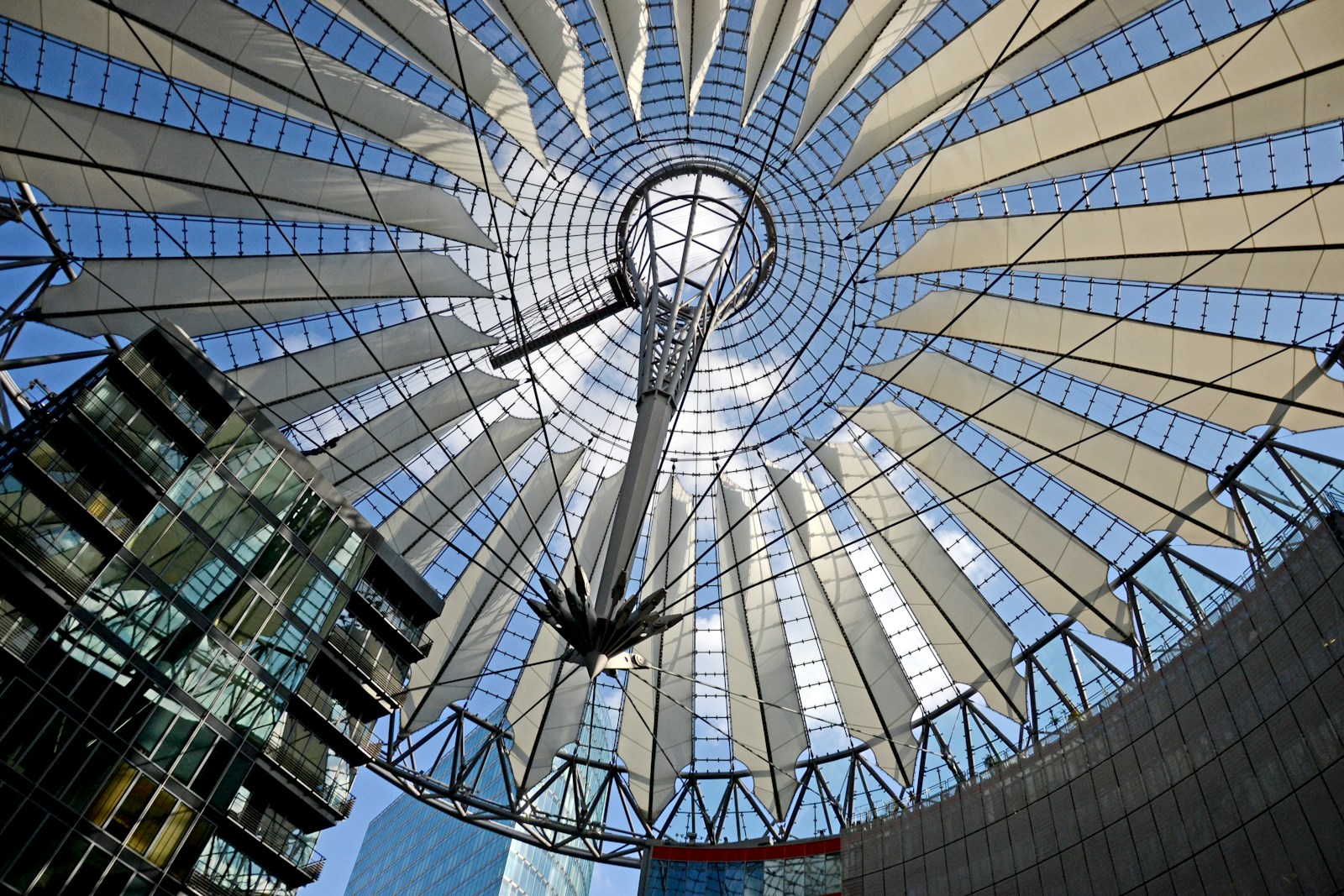
Berlin's Potsdamer Platz - Photo by Dan Stephens - Unsplash
Most people imagine architecture beginning with a sketch. A dramatic line across tracing paper. A sudden formal idea. The architect alone, pulling a building out of intuition.
It persists because it is a satisfying image: the solitary creator, the inspired gesture, the sketch that becomes a landmark.
But the buildings that last rarely begin there.
They begin with people.
Not abstract “users” or demographic profiles. Actual behaviour. How people move when they are late. Where they stop when they are uncertain. How they rest when they are tired. How they gather when they want to celebrate. How they try to find privacy in crowded places. How they respond to light, noise, temperature, scale.
Over the last half century, much of contemporary architecture has shifted toward treating human experience not as the outcome of design but as its starting condition. That sounds like a minor adjustment. It is not. It changes everything from the width of a corridor to the placement of a window to the texture of a handrail people barely notice but instinctively trust.
Architecture begins with behaviour
Architecture is not fundamentally the drawing of buildings. It is the organisation of human activity in space.
The idea is old, though for much of architectural history buildings were treated primarily as objects: things defined by proportion, material, symbolism, and composition. Human behaviour was expected to adapt afterward.
The Dutch architect Herman Hertzberger argued for something different. His Montessori school in Delft, completed in 1966, treated children’s movement through space as the central design problem. Classrooms opened into shared areas that could change function throughout the day. The building was less a container than a framework.
That distinction matters.
A container assumes it knows exactly what it will hold. A framework assumes people will adapt spaces in ways no architect can fully predict.
A home, for example, is not just walls and openings. It is a chain of behaviours: arriving, putting things down, cooking while speaking to someone nearby, retreating from noise, sleeping somewhere that feels separate from the rest of the day. Every one of those actions has spatial consequences.
The distance between the entrance and the kitchen matters. So does the sightline from the stove to where children sit. So does the acoustic separation between work and rest.
The same applies at larger scales.
A hospital is not simply a technical building. It contains overlapping patterns of movement that must coexist without conflict: urgency, waiting, recovery, uncertainty. A station is flow under pressure, where people carrying luggage, children, or anxiety make rapid decisions in unfamiliar surroundings.
Buildings designed from formal sketches alone often struggle with this. The circulation that looked elegant in plan becomes confusing in use. Atriums that photograph beautifully become acoustically unbearable. Roof terraces remain empty because no one can intuitively reach them.
Buildings designed around behaviour tend to feel obvious once occupied. Not simplistic. Just coherent. The design recedes into experience.
Buildings answer human questions
Every building answers a set of human questions, whether the architect consciously addressed them or not.
How do people enter without hesitation?
Not simply where the doors are, but whether the building explains itself from the street. Whether the transition from outside to inside feels clear or awkward.
Where can people pause without blocking movement?
People rarely stop in the middle of spaces. They gather at edges, near changes in level, beside surfaces they can lean against, somewhere that gives them a reason to linger.
What makes someone feel oriented rather than lost?
Research in environment-behaviour studies has shown that spatial disorientation produces measurable stress responses. People often describe certain buildings as vaguely unpleasant without understanding why. Frequently the issue is not appearance but uncertainty.
What makes a place usable rather than merely impressive?
Architecture differs from sculpture in one essential respect: it is incomplete without occupation. A building succeeds not when it photographs well but when it works repeatedly, under ordinary conditions, for ordinary use.
The buildings that answer these questions well tend to outlast architectural fashion. People continue using them in ways their designers may not have predicted but would still recognise.
What the brain does in buildings
Over the last two decades, architects and neuroscientists have started examining how space affects cognition and emotion in measurable ways.
Some findings are surprisingly consistent.
Ceiling height influences thought patterns. Research by Joan Meyers-Levy at the University of Minnesota found that higher ceilings encourage abstract thinking, while lower ceilings encourage concentration on detail.
Light affects more than mood. Daylight regulates circadian rhythms, influences alertness, and shapes emotional tone in ways artificial lighting still struggles to replicate.
Social spacing matters too. Edward Hall’s work on proxemics demonstrated that people maintain different comfort distances depending on the type of interaction involved. Architecture that ignores these distances creates low-level discomfort people often cannot explain.
Complexity matters in subtler ways. Humans tend to respond well to environments with intermediate visual complexity: not empty, not overwhelming. Research into fractal patterns suggests that environments resembling natural visual structures produce measurable relaxation responses.
This has implications for architecture that go beyond aesthetics. Many traditional buildings contained layers of texture, repetition, ornament, and material variation that modernism often stripped away. Those elements may have been doing more psychological work than twentieth-century architecture acknowledged.
The built environment is not passive scenery. It changes behaviour, attention, stress, and perception.
From object design to experience design
For centuries architecture was judged primarily as an object: proportion, composition, silhouette, material.
Contemporary practice has shifted toward something closer to experience design.
That is a different problem entirely.
An object can be understood in a drawing or photograph. An experience only exists once someone moves through it.
Architecture schools still rely heavily on renderings and models, which privilege visual clarity over lived experience. As a result, some buildings photograph beautifully while performing badly in everyday life.
Juhani Pallasmaa argued in The Eyes of the Skin that architecture had become overly dependent on vision at the expense of the other senses.
A building is also acoustic. The way sound behaves in a church contributes to the sense of reverence. A building is tactile: the weight of a door, the resistance of a floor, the temperature of stone under the hand. Buildings even have smell, though designers rarely discuss it.
Most people experience architecture through their bodies before they analyse it visually.
They notice whether a room feels cold. Whether their feet tire on certain floors. Whether a space echoes too much. Whether they feel exposed or sheltered.
Designing for those experiences is not secondary to architecture. It is the substance of it.
The limits of “form follows function”
Louis Sullivan’s phrase “form follows function” remains one of architecture’s most quoted ideas, though it is often simplified beyond recognition.
Sullivan did not mean buildings should be stripped of all expression. He meant form should emerge from purpose rather than decoration being applied afterward.
Modernism adopted part of that argument and pushed it further. Decoration became suspect. Simplicity became a moral position.
The result was mixed.
Many modernist buildings achieved remarkable clarity. Many were also uncomfortable to inhabit. Glass curtain walls made towers look elegant from outside while leaving occupants overheated, exposed, or unable to open windows.
The problem was not the idea of function. It was the definition of it.
Mechanical function alone is too narrow. Buildings do more than keep out weather and organise circulation.
They also shape emotion, social interaction, privacy, belonging, anxiety, dignity.
The most successful contemporary buildings tend to operate across all these levels at once.
The Maggie’s Centres in the UK are a good example. Designed as support spaces for people with cancer, they deliberately avoid the institutional atmosphere of hospitals. Different architects approached the brief differently, but the buildings share a common quality: they feel humane.
That is not decorative. It is functional in the deepest sense.
Emotional architecture
People respond emotionally to buildings before they assess them practically.
A space can feel calm, tense, welcoming, confusing, oppressive, generous.
Those reactions shape behaviour.
Hospital research has shown that patients in rooms overlooking natural environments often recover faster and require less pain medication than patients facing blank walls. Roger Ulrich’s 1984 study remains one of the clearest demonstrations that architecture can influence measurable health outcomes.
Schools work similarly. Buildings that feel institutional produce a different atmosphere for learning than buildings that feel open, varied, and connected to daylight.
Entrances matter too.
Many public buildings unintentionally communicate that visitors are unwelcome or out of place. The difficulty is not physical access but emotional access: uncertainty about where to go, whether one belongs, whether the institution anticipated ordinary human confusion.
Peter Zumthor describes this quality as atmosphere.
Not mood in a vague sense, but the immediate emotional condition a building produces before conscious analysis begins.
Some spaces communicate this with unusual precision. You understand something about them almost instantly, even if you know nothing about architecture.
Why the sketch comes later
The romantic image of the architect sketching a building into existence obscures how design actually develops.
For architects whose work lasts, drawing often comes relatively late.
Álvaro Siza’s sketches are famous, but he has described them less as inventions than as tests: ways of checking whether an understanding of the site and programme has become coherent enough to build.
The real work happens earlier.
Conversations with clients. Observing how people live. Visiting the site repeatedly. Studying precedent buildings. Watching how light changes during the day.
Before drawing begins, careful architects usually understand who will use the building, how they will arrive, what the building needs to do under ordinary conditions, how it might change over time, and where problems are likely to emerge.
That groundwork is not separate from design. It is design.
The sketch simply makes the thinking visible.
Buildings as systems
One of the biggest shifts in contemporary architecture is the move from thinking about buildings as isolated objects to thinking about them as systems.
A building is a network of relationships.
Structure affects circulation. Light affects temperature and mood. Acoustic choices influence concentration and privacy. Maintenance affects ageing. Social behaviour changes how spaces are actually used.
When one part fails to align with the others, the building suffers.
A visually striking building that is expensive to maintain often deteriorates badly. A building with strong formal composition but poor acoustics may become frustrating to occupy regardless of its appearance.
This systems approach connects architecture with broader human-centred design disciplines.
One result is the growing importance of post-occupancy evaluation: returning to buildings after they have been in use and studying how people actually inhabit them.
The findings are often uncomfortable.
Buildings praised at opening sometimes perform poorly in practice. Others that seemed modest turn out to be deeply valued by occupants.
The difference usually lies in how accurately the design anticipated real behaviour.
Design intent versus lived reality
Architects consistently overestimate how closely people will use buildings as intended.
Communal spaces remain empty because circulation patterns discourage lingering. Seating areas become corridors. Beautiful plans become confusing in three dimensions.
These failures often come from assumptions about behaviour replacing observation of it.
Christopher Alexander’s A Pattern Language attempted to codify recurring spatial conditions that support human activity. Its patterns emerged from observing places that worked rather than imposing abstract theory.
Many ideas from the book have since become standard practice: transitional spaces between public and private areas, alcoves within larger rooms, indirect seating arrangements that encourage conversation.
Alexander’s central insight still matters.
Good architectural decisions are usually discovered through observation, testing, and refinement rather than pure invention.
Public space and who buildings are designed for
Architecture is never socially neutral.
Buildings are designed around assumptions about who will use them, how they will move, and what kinds of bodies and behaviours are expected.
Historically, many public buildings assumed users who were able-bodied, confident, familiar with institutional systems, and moving efficiently through space.
The Universal Design movement challenged that assumption.
Features introduced for accessibility often improved buildings for everyone. Kerb cuts designed for wheelchair users also benefited parents with pushchairs, travellers with luggage, delivery workers, cyclists, and anyone temporarily injured.
The same principle extends elsewhere.
Clear wayfinding helps anxious visitors as much as disabled ones. Better acoustics improve concentration for everyone, not only people with hearing impairments.
Buildings designed around the full range of human conditions usually perform better than buildings designed around an imagined “normal” user.
Technology and the limits of data
Digital tools now allow architects to collect detailed information about how buildings are used.
Occupancy tracking, environmental sensors, movement analysis — all of this can reveal patterns that were previously invisible.
The information is useful. It can identify congestion points, thermal discomfort, underused rooms, inefficient layouts.
But data has limits.
It records behaviour more easily than meaning.
A crowded space may be successful or merely unavoidable. A quiet room may be failing or serving a necessary purpose that naturally leaves little trace.
The emotional experience of architecture remains difficult to quantify.
You can measure movement, noise levels, or temperature. It is much harder to measure whether a space makes someone feel calm, dignified, focused, or briefly more connected to the world around them.
That does not make those effects less important.
It may make them more so.
Why human-centred buildings endure
Buildings designed around human behaviour tend to age well.
Not because they avoid physical deterioration, but because they remain useful after technologies, institutions, and fashions change.
A commercial building may outlast the organisation that commissioned it. Workplace expectations will shift. Technologies will disappear. Social habits will change.
Buildings designed around temporary organisational logic often struggle to adapt.
Buildings designed around more stable aspects of human behaviour — light, scale, privacy, movement, social interaction — tend to remain relevant.
The Georgian terrace is a good example. Built for a social structure that no longer exists, it still functions remarkably well because its spatial logic continues to align with how people prefer to live.
Good light. Clear room hierarchy. Generous proportions. A balance between connection and privacy.
Those qualities survive changes in fashion.
The architect’s actual role
It is tempting to think of architects primarily as stylists.
The role is closer to translation.
Architects translate behaviour into space, movement into layout, emotion into atmosphere, collective values into physical form.
Aesthetics still matter. Materials matter. Proportion matters.
But they matter because they support the larger task rather than replace it.
The visible sketch is only the final expression of a much longer process: conversations, site visits, precedent studies, observations, arguments about how a building should actually work on an ordinary day.
That ordinary day is the real test.
Not the opening ceremony. Not the photograph.
The Tuesday morning when people are tired, distracted, late, anxious, working, recovering, waiting, or simply trying to move through the building without friction.
Architecture succeeds or fails there.
Final thought
The idea that great buildings begin with sketches survives because it compresses a complicated process into a single romantic moment.
The best buildings suggest something less dramatic.
They begin with close attention to human life: how people move, gather, withdraw, rest, orient themselves, and respond emotionally to space.
When those realities are understood properly — through observation, conversation, and repeated testing — the resulting building often feels less designed than inevitable.
That feeling is the real achievement.
The sketch is only the method used to reach it.
References
- University of the Built Environment – Human-centred design in architecture: https://www.ube.ac.uk/whats-happening/articles/human-centered-design/
- Dormakaba Blog – Human-centred architecture principles: https://blog.dormakaba.com/human-centered-architecture-what-is-it-and-how-it-makes-a-difference/
- Saka Studio – Human-centric design in architecture: https://www.sakastudio.org/post/the-role-of-human-centered-design-in-modern-architecture
- ArchDaily – Human-centred design and architecture practice: https://www.archdaily.com/989103/human-centered-design-what-architects-can-learn-from-ux-designers
- Stanford Encyclopedia of Philosophy – Philosophy of Architecture: https://plato.stanford.edu/entries/architecture/