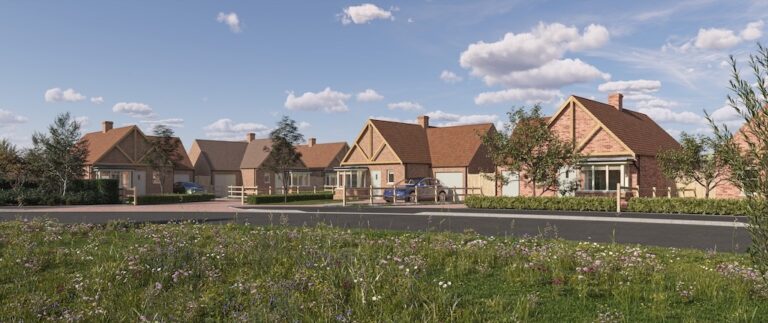
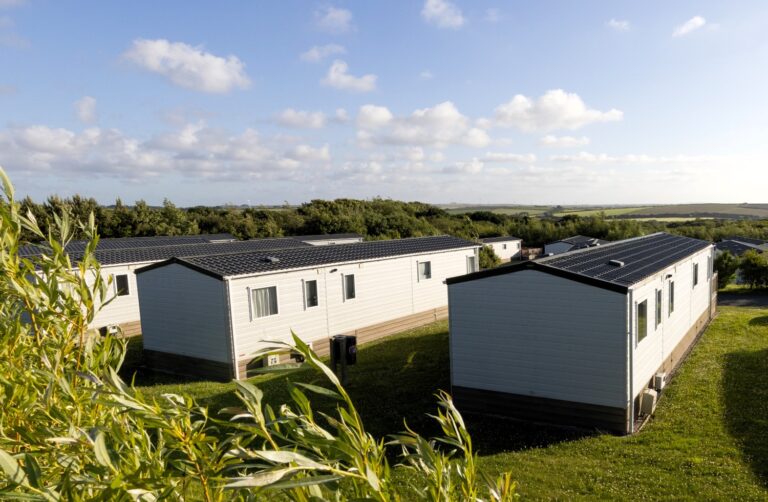
The UK-based technology firm Automated Architecture, known as AUAR, is making strides in addressing the ongoing housing crisis with its innovative portable micro-factories. These facilities are capable of producing the wooden framing for a house in just one day, a significant reduction from the four weeks typically required by traditional timber framing crews.
The housing crisis is a pressing issue globally, particularly in urban areas where demand consistently outstrips supply, resulting in soaring property prices. In the UK and the US, an ageing workforce in the construction industry has exacerbated the situation. According to the Construction Industry Training Board, the UK will require an additional 250,000 construction workers by 2028 to meet its building targets. Alarmingly, in 2023, more individuals exited the industry than joined.
AUAR’s technology is designed to complement the existing workforce rather than replace it. The company charges homebuilders by the square foot for producing timber panels, streamlining the construction process. Homebuilders provide AUAR with their building plans, and the company’s software, Master Builder, utilises artificial intelligence to determine the necessary panels and the amount of timber required.
The micro-factory, which fits into a shipping container, is dispatched to the construction site along with an operator. Inside, a robotic arm measures, cuts, and nails the timber into panels that can reach lengths of up to 22 feet (6.7 metres), accommodating spaces for windows and doors while also drilling holes for plumbing and wiring.
AUAR’s micro-factories are not only efficient but also more cost-effective. The service is 30% cheaper than employing a standard timber framing crew and up to 15% less expensive than purchasing pre-made panels from large factories. Additionally, the process is environmentally friendly; the micro-factory adapts to the natural imperfections of timber, reducing waste and enhancing energy efficiency by ensuring tighter panel fits.
Currently, AUAR operates three micro-factories in the US and Europe, with plans to deliver five more within the year. The necessity of such innovations in the construction sector has been highlighted, as they are now considered key to any construction business model.
The UK government has committed to constructing 1.5 million new homes by 2029. However, recent statistics reveal that only 208,600 net additional dwellings were completed in England during the 2024 to 2025 financial year, marking a 6% decrease from the previous year. There is an advocacy for a shift from traditional brick houses to wood-framed structures, which produce 20% fewer greenhouse gases compared to brick, according to research from Bangor University.
Despite the environmental benefits, there remains a reluctance among builders and developers to adopt timber framing, primarily due to concerns over durability and fire resistance. In 2019, only 9% of homes built in England were timber framed, in stark contrast to Scotland, where 92% of homes utilise wood in their construction. Overcoming cultural resistance is a significant challenge for new technologies like AUAR.
Other companies are also exploring similar innovations. London-based Facit Technologies and US-based Cuby Technologies are developing micro-factories and modular units for on-site construction, respectively. AUAR has successfully raised £7.7 million ($10.3 million) to date and is expanding its footprint in the US, where a significant housing shortage exists, estimated between 1.5 and 5.5 million homes. A Goldman Sachs report indicated that this shortage is a primary driver of rising house prices and affordability issues.
In 2024, AUAR partnered with Rival Holdings, a US investment firm focused on the construction sector. While details of the partnership remain undisclosed, AUAR is reportedly in a growth phase in the US and is pursuing additional partnerships. The company currently has 600,000 square metres (6.5 million square feet) of panels in production, equating to hundreds of homes.
There are ambitious plans to have 1,000 micro-factories operational by 2030, aiming to produce 200,000 homes annually.