Environmental Smart has announced the award from GB Energy’s Community Fund for two new community energy feasibility projects in North Yorkshire. The Lastingham Decarbonisation Project and the Malton Heat Network will now move forward as detailed feasibility assessments, delivered in partnership with local stakeholders and sector specialists.
The projects will explore practical, investable low-carbon energy solutions designed to cut emissions, strengthen local energy resilience and lay the foundations for long-term community benefit.
Lastingham, a village of around 70 homes and 200 residents within the North York Moors National Park, is set to explore village-wide decarbonisation with support from Sustainable Lastingham and the North York Moors National Park Authority. The project, co-led by YorEnergy3, will assess practical solutions, identify financing options, and recommend a community ownership model. While previous audits highlighted property-specific measures, the focus will now be on whole-village approaches, including solar PV, hydro-power, and shallow and deep ground-source heat.
Assessments by YorEnergy, supported by the residents’ association, revealed that the village relies heavily on oil for heating due to the absence of a gas grid and intermittent electricity supply. With more than 700,000 litres of oil consumed annually, the village’s heating carbon footprint exceeds 330 tCO2e. The project aims to reduce emissions significantly, while boosting local energy resilience.
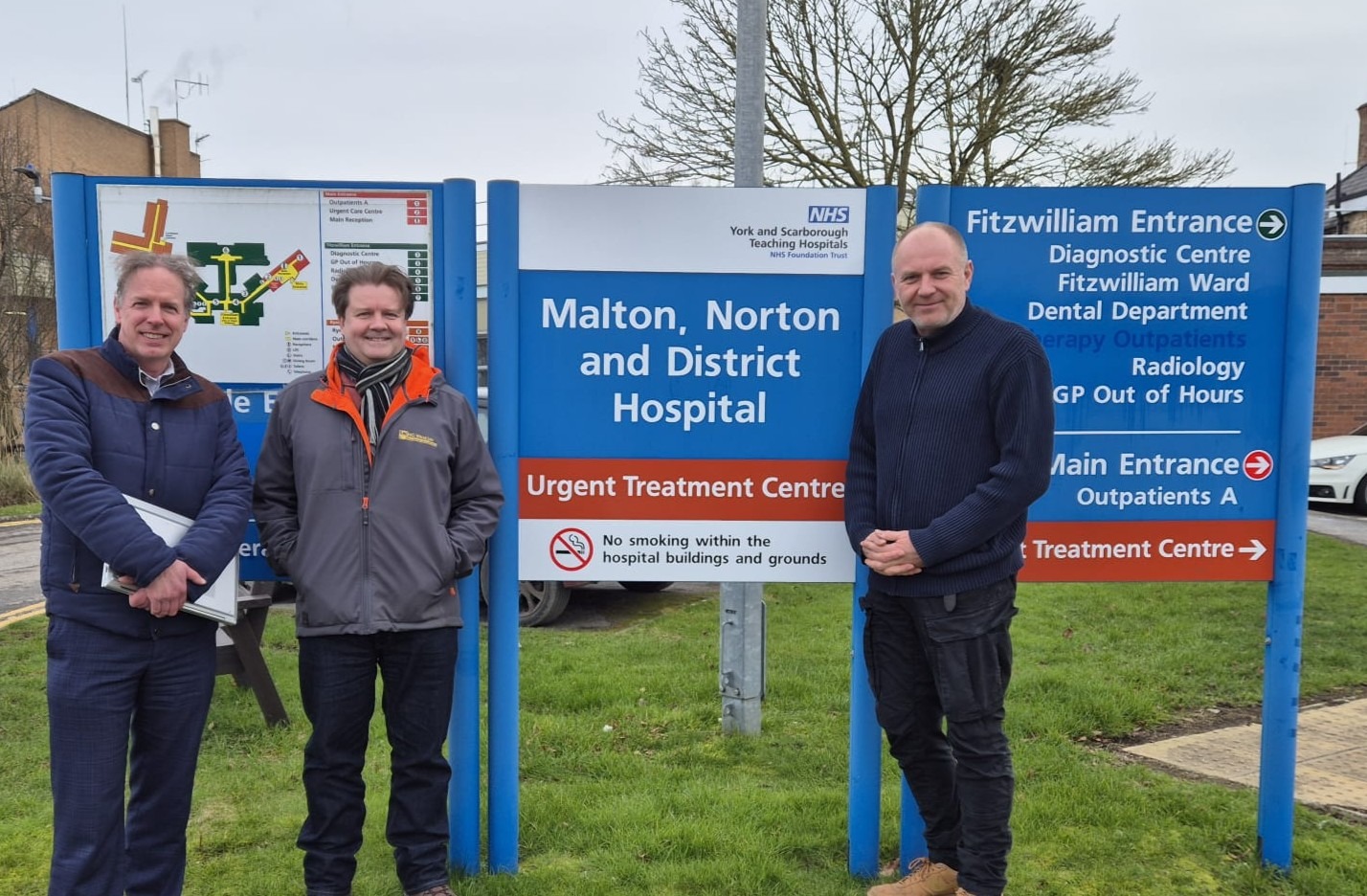
Malton School and the Malton Community Hospital lie 200 metres apart, with approximately 150 residential properties occupying the immediate space between the two sites. The Malton Heat Network Project will assess the feasibility of deploying a ground-source heat network to heat these two anchor community energy partners and the local residents, lowering energy costs and decarbonising the system – two objectives of the Warm Homes Plan.
The potential for solar PV at the anchor sites to aid the power requirement for the heat network will also be assessed.
Feasibility studies will assess both shallow ground-source and deep geothermal heat systems to determine whether a single approach or a hybrid solution is best suited for the urban heat network. The study will also recommend an ownership model that ensures community benefits are retained locally, alongside projected energy cost reductions and carbon savings from the network’s implementation.
Environmental Smart director, Steve Mason said:
“Bold projects like these will become gamechangers for rural areas. Our villages and market towns face different challenges in delivering sustainable energy options, with robust infrastructure often limited or, at worst, out of reach.
“Innovation like this sparks new possibilities, cutting emissions, empowering local communities, and setting standards for others to follow is crucial for the area’s economy and well-being.
“Just adapting is not enough; pioneering concepts like these lead the way to cleaner, cost-effective energy solutions that will meet the needs of now and create a resilient future for the next generation.
“While the region has been at the forefront of deep geothermal research and development for several years, these two projects will enable different ground-source technologies to be assessed in both a rural and urban setting, together with other decarbonisation technologies that could help to provide hybrid solutions in such environments.
“The success of these two GB Energy grant applications shows that North Yorkshire has the right local stakeholders who, when working with leading national technology developers, can conduct feasibility studies on solutions that can have regional and national significance.”
Russell Hoare, Project Manager, said:
“While the region has been at the forefront of deep geothermal research and development for several years, these two projects will enable different ground-source technologies to be assessed in both a rural and urban setting, together with other decarbonisation technologies that could help to provide hybrid solutions in such environments.
“The success of these two GB Energy grant applications shows that North Yorkshire has the right local stakeholders who, when working with leading national technology developers, can conduct feasibility studies on solutions that can have regional and national significance.”