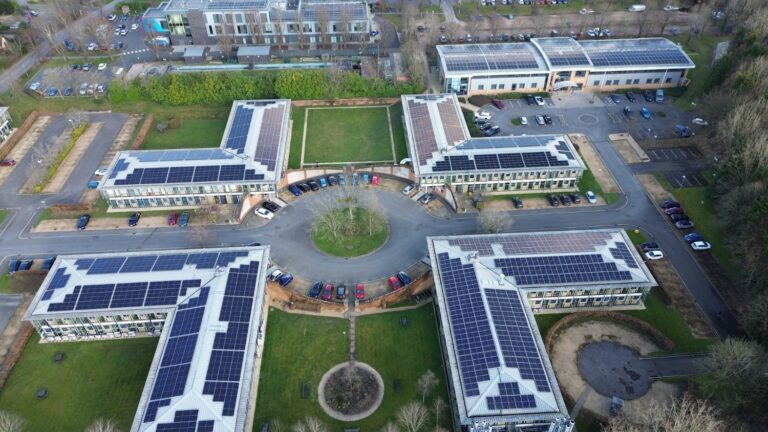
The Government has introduced the Future Homes Standard (FHS), which aims to enhance energy efficiency in new homes by mandating renewable energy sources and supporting plug-in solar panels. This initiative is designed to facilitate the transition to net zero emissions while addressing energy costs for a small percentage of existing homes.
James Butcher, Deputy Chief Executive of the National Federation of Builders (NFB), commented on the FHS, stating, “The Future Homes Standard (FHS) only scratches the surface of decarbonising Britain, but it remains an important step forward in bringing down the cost of energy for 1% of homes, while laying groundwork for the 99% already built.” He emphasised that all homes would benefit from plug-in solar panels, and he expressed optimism about the potential advantages of supporting plug-in home batteries.
The Government is collaborating with major retailers to make plug-in solar technology accessible to consumers, allowing for a DIY approach to generating electricity from small solar arrays. The FHS will come into effect on 24 March 2027 and is supported by the Home Energy Model (HEM), which will provide a new methodology for compliance calculations.
Key announcements regarding the FHS include the mandatory use of renewable energy in most new build properties, a technical review of Part O: Overheating regulations, and the release of approved documents for Part L (energy) and Part F (ventilation). Additionally, guidance on smart-ready new builds and an impact assessment for the FHS will be released, with HEM following shortly thereafter.
Rico Wojtulewicz, Director of Policy and Market Insight at the NFB, expressed gratitude to the Government for considering their recommendations regarding the FHS. He noted, “We thank the Government for listening to our FHS recommendations to re-review Part O, permit non-roof top solar and broaden the definition of acceptable renewables. This will mitigate some of the grid connection challenges housebuilders will face.”
However, Wojtulewicz also highlighted concerns, stating that the NFB’s proposals for a grid cost cap and connection delay exemption were overlooked. He pointed out that there was no mention of necessary reforms related to the energy regulator, such as issues with quote transparency, connection date certainty, and cost thresholds.
Wojtulewicz further remarked on the FHS impact assessment, which he believes favours volume builders by assuming that standardised layouts will alleviate design challenges and that landowners will absorb increased build costs. He expressed concern that the assessment did not monetise certain impacts, which could have negatively affected the overall scorecard. He added, “Consequently, the Government have reached the conclusion that there would be little negative impact on viability or new supply. This is a position we do not share and with regulations and taxes further increasing build costs, we are desperately worried for the fate of our industry.”
On the ambitious housebuilding target set by the Government, Wojtulewicz stated, “The 1.5m new home target is admirable but we have always said 300,000 homes annually in the final two years of this government’s term is more realistic and if achieved, a triumph for the nation.” He cautioned that without significant grid reform, the FHS announcement complicates the path to achieving the 300,000 target. He warned that delays in projects due to a more challenging grid connection environment could lead to small and medium-sized enterprises exiting the industry or downsizing in response to increased costs and cash flow issues.