Homeowners are increasingly abandoning the traditional bright, clinical bathroom lighting in favour of a softer, more atmospheric approach that transforms evening showers into a calming ritual. This shift, popularised on social media platforms like TikTok, involves dimming or switching off the main overhead lights and relying instead on subtle, ambient illumination.
Known as the ‘dark showering’ trend, this practice uses gentle lighting from sources such as dimmable wall lights, waterproof lamps, or carefully positioned ambient fixtures to create a soothing environment. The aim is to foster a sense of relaxation and help users mentally separate their busy workday from their evening downtime, rather than showering in complete darkness.
Waleed Shahid, a bathroom expert from Royal Bathrooms, explains the appeal: “The bathroom is one of the few rooms where we can shut the door and have ten minutes completely to ourselves. People no longer want it to feel like a purely practical space. They want a room that helps them slow down, and softer lighting and darker finishes can completely change how an ordinary shower feels.”
Rethinking Bathroom Lighting
One of the key elements in creating this new bathroom ambience is to move away from the overpowering ‘big light’—the bright, white spotlights that are often installed directly above showers. While such lighting is essential for tasks like shaving or cleaning, it can be jarring when the goal is to unwind.
Shahid advises layering lighting options rather than relying on a single, intense source. “The best bathrooms have different layers of light rather than one powerful switch that floods the whole room,” he said. “Keep your main lighting for practical jobs, but add a dimmable wall light, illuminated mirror or warm, low-level lighting that can be used on its own in the evening.”
He emphasises that safety remains paramount: “You should never shower in total darkness, particularly on a slippery floor. The aim is to soften the room while still making sure you can clearly see the shower entrance, controls and anything beneath your feet.”
Choosing Colours That Enhance the Mood
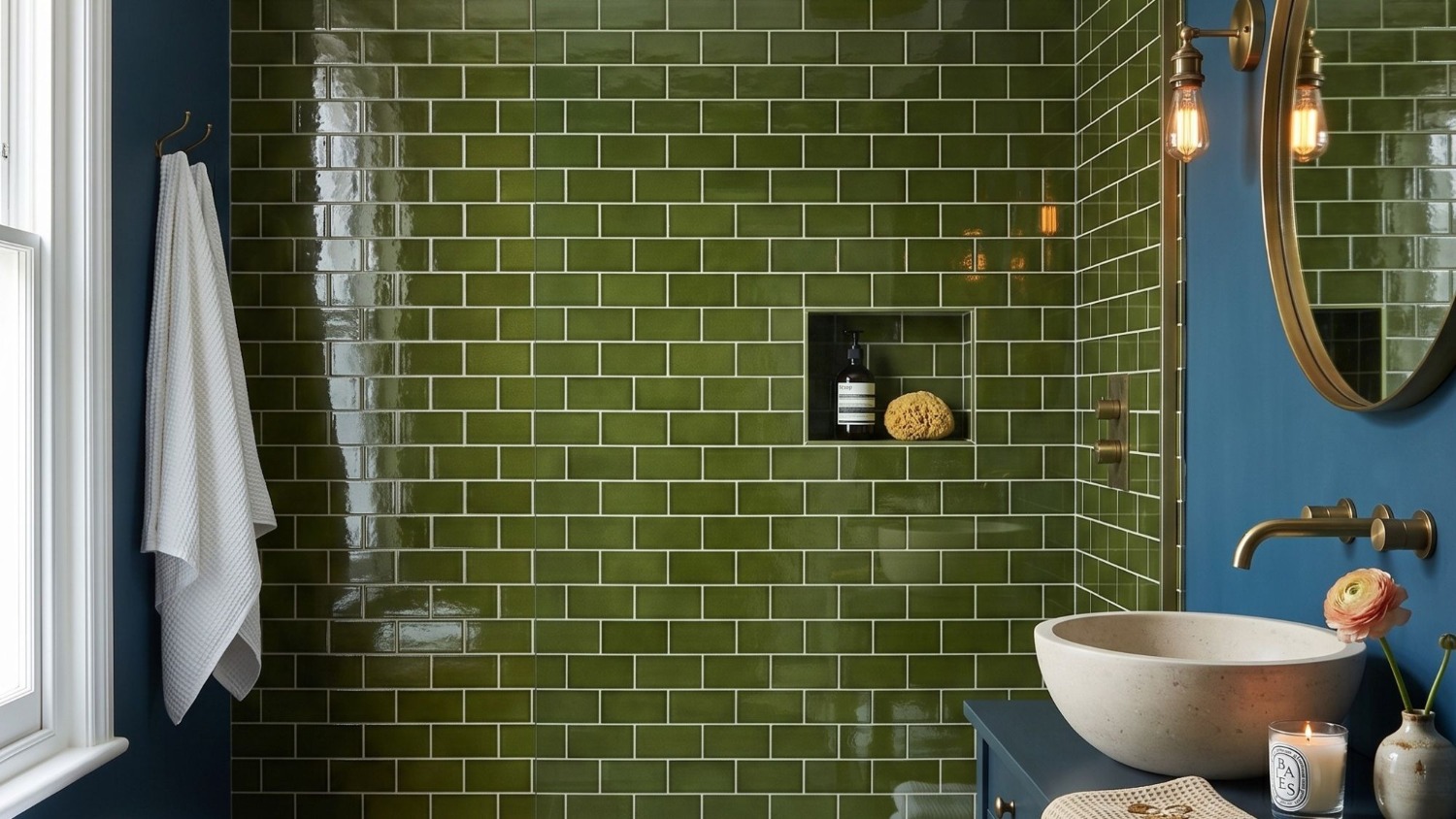
Contrary to the misconception that dark bathrooms require painting every surface black, experts recommend using deep, rich colours that add warmth and character. Shades such as deep green, navy, chocolate brown, burgundy and charcoal create a dramatic yet inviting atmosphere.
Abbas Youssefi, Managing Director of Porcelain Superstore, an independent tile retailer, highlights the importance of colour depth and texture. “Dark bathrooms work best when the colour has some depth to it. A deep green or brown tile will look dramatic during the day, but it can appear much softer and warmer under low lighting at night,” he said.
Youssefi also suggests that tiles with subtle variations in shade, texture or glaze are particularly effective because they catch small amounts of light rather than absorbing it completely. He advises against tiling the entire room in dark shades, suggesting instead to concentrate the darkest finishes inside the shower or behind the basin to create visual impact without making the space feel enclosed.
Maximising Space in Small Bathrooms
Many homeowners fear that dark colours will make small bathrooms feel cramped. However, Youssefi argues that a consistent dark colour scheme can actually create a seamless, snug effect by reducing the visual boundaries within the room.
“The mistake people make is adding too many sharp colour changes,” he said. “If you use a dark tile in the shower, a completely different floor and then bright white paint above it, the eye notices every boundary and the room can feel busier. Repeating similar tones across the walls and floor creates a more continuous look.”
He suggests that large mirrors, clear shower glass and warm lighting can help bounce light around the room, preventing it from feeling closed in. “Dark does not automatically mean cramped. A simple, well-planned scheme can make a small bathroom feel far more polished.”
Introducing Wood for Warmth
To counterbalance the potential severity of dark surfaces, incorporating wood elements is a popular strategy. Wooden vanity units, slatted bath panels, stools or shelves can break up solid dark surfaces and add natural warmth. Wood flooring can also provide a softer foundation for the overall design.
Darwyn Ker, Managing Director of Woodpecker Flooring, a family-run wood floor specialist, explains: “Dark bathrooms need something natural to prevent them from feeling too severe, and wood is one of the easiest ways to do that. The grain and changing tones bring movement into a room that might otherwise be dominated by flat, dark surfaces.”
Ker cautions that not all wood is suitable for bathrooms due to moisture concerns. “An engineered wood floor is more stable than solid timber, but homeowners must still check that the specific product is suitable for bathroom use and follow the fitting and maintenance guidance carefully. Where real wood is not suitable, wood-effect flooring or tiles can provide a similar warmth without creating unnecessary worry around splashes and moisture.”
Balancing Shine and Texture
While dark bathrooms benefit from some reflected light, excessive use of highly polished surfaces can undermine the tranquil atmosphere. Experts recommend keeping large surfaces matte or softly textured, while introducing smaller accents of shine through elements like mirrors, taps, handles and glazed tiles.
Shahid explains: “You need contrast in a dark bathroom, but you do not need every surface fighting for attention. Matt furniture and darker walls create the calm background, while brushed brass, chrome or softly reflective tiles will pick up the warmer light.”
He also notes that practical features such as illuminated mirrors or lighting beneath wall-hung vanities can enhance usability while contributing to a hotel-like ambience. “The result should be a bathroom that still works perfectly in the morning but feels completely different when you turn down the lighting at night.”
Testing the Trend Without a Full Renovation
Adopting the dark showering trend does not necessarily require a complete bathroom overhaul or painting every surface black. Simply changing the type of lighting used in the evening can provide an immediate sense of calm.
Adding deeper-coloured towels, a dark shower curtain or richer wall paint can further build the mood without a major commitment. For those considering a larger renovation, extending warm dark tones through tiles, furniture and flooring will create a more immersive sanctuary.
Safety remains a critical consideration throughout any design changes. Pathways, steps and shower controls should remain clearly visible, and all lighting and electrical products must be suitable for wet room conditions.
When executed thoughtfully, turning off the overpowering ‘big light’ can transform an everyday shower into a genuine escape, combining practicality with a luxurious, hotel-style atmosphere.