
The Case for the Office: How Thoughtful Design Boosts Productivity and Entices Us Back
After years of kitchen-table Zoom calls and the quiet commute from bedroom to home office, the way we work has fundamentally changed. The pandemic introduced millions to the freedoms of working from home — no rush hour traffic, more family time, pyjamas all day if we wanted. Now, however, companies and employees alike are grappling with a new question: as the world reopens and hybrid schedules become the norm, what role should the physical office play? Many businesses are eager to see their teams back under one roof at least a few days a week. In fact, surveys indicate that by late 2024 nearly 90% of companies had instituted policies to bring staff back into offices. Yet forcing people back full-time is a delicate task. Workers have grown accustomed to flexibility, and they’re vocal about keeping it — almost half of UK professionals say they’d consider resigning if told to return five days a week. The message is clear: if employers want people in the office, the office itself needs to earn the commute.
Human Connections, Culture and the Creativity Spark
There are some things a video call can’t replicate. Those casual conversations by the coffee machine that spark a new idea; the quick lean over a desk to ask a colleague a question; the camaraderie of sharing the same space. Working in an office surrounds us with colleagues in a way that fosters spontaneity and connection. We learn and collaborate more naturally when we’re face-to-face — picking up knowledge through overheard exchanges and observing how others solve problems. The nuanced communication of an in-person meeting — a reassuring smile, attentive body language, the collective energy of people brainstorming around a whiteboard — tends to flow more freely than in a grid of muted Zoom thumbnails. It’s no surprise that many leaders feel innovative ideas blossom more readily when teams share a room. Even hard data bears this out: a recent large-scale study found on-site project teams were consistently more likely to produce breakthrough innovations than remote teams. Remote colleagues, for all the miracles of modern tech, often miss out on the “watercooler moments” and serendipitous interactions that drive creativity and problem-solving.
Office life also helps build something less tangible but equally important: a company’s culture and a sense of belonging. Humans are social creatures; being together in person can forge stronger bonds of trust and friendship among co-workers. These bonds aren’t just a nice extra — they have real effects on morale and retention. Employees who feel connected to their peers and company are more likely to stay engaged, whereas isolated employees are more likely to become disengaged or start looking elsewhere. On the flip side, remote work can sometimes leave people feeling lonely. One survey of 7,500 employees found that over half felt lonely at least some of the time. Younger staff and new hires in particular often crave the mentorship and social learning that comes from being physically present with experienced colleagues. An office can provide that communal environment — the subtle support network of seeing others working alongside you, and a clear boundary between “work time” and “home time” that many remote workers find themselves missing. While flexible work offers enormous benefits, the office remains a vital counterbalance — a place where teams can rally together, share a sense of purpose, and collectively create more than the sum of their parts.
Of course, these advantages only shine if the office itself is up to scratch. A cramped maze of grey cubicles under flickering neon lights won’t inspire anyone to give up their home comforts. To truly make the office worth coming in for, the environment needs to enhance those human benefits — encouraging collaboration, energising people, and supporting everyone’s ability to do their best work. This is where thoughtful workplace design becomes absolutely essential.
Designing Offices That People Want to Work In
Office design might once have been an afterthought, but today it’s centre stage in the effort to entice staff back on-site. There is, as the World Green Building Council put it, “overwhelming evidence” that the design of a workplace directly affects the health, wellbeing and productivity of its occupants. Everything from air quality and lighting to acoustics and layout plays a role. If employees are going to swap the comfort of home for a desk at headquarters, that desk had better be in an environment that feels welcoming, inclusive, and geared toward making their day easier. The most forward-thinking organisations understand this. Rather than mandating in-person work for its own sake, they are redesigning offices to be purposeful, people-centred spaces — the kind that support collaboration, innovation, and trust when people do come together.
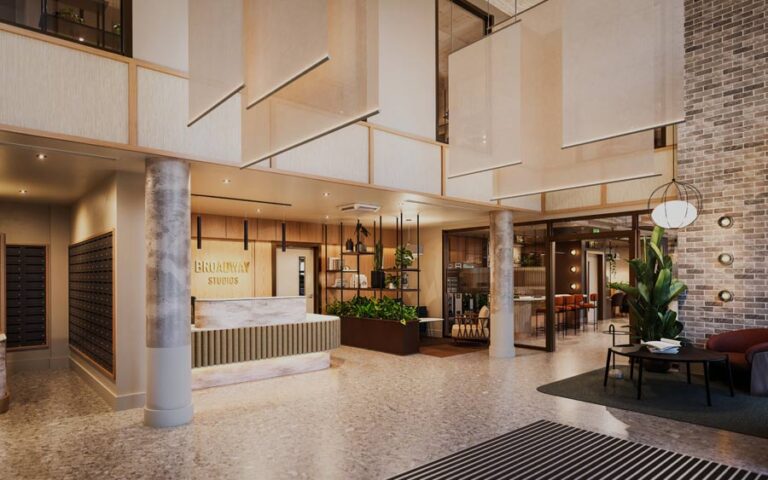
So what does a compelling modern office look like? In contrast to the uninspired offices of the past, today’s best workplaces are often described as “destination offices” — places so thoughtfully equipped and engaging that employees actively want to be there. In practice, that means incorporating amenities and design features people simply can’t get in their spare-bedroom home office. Think of open, artfully designed collaboration zones where teammates can gather informally, interspersed with quieter nooks and private pods where you can retreat to focus. Goodbye uniform rows of identical desks; hello variety and choice. One area might resemble a cosy coffee shop lounge with sofas and greenery, perfect for a casual brainstorming chat. Around the corner, you might find soundproof booths or a library-like quiet room for deep work without interruptions. Plenty of natural light, indoor plants, and comfortable, ergonomic furniture signal that well-being is a priority, not an afterthought. These elements aren’t just aesthetic — studies have shown that exposure to natural elements like daylight and greenery can reduce stress and even boost creativity. Even the air we breathe matters: improving ventilation and air quality in offices has been linked to measurable gains in productivity, on the order of 8–11% in some studies. In short, a well-designed office should work harder for people, so that people can work at their best.
A modern office interior can combine comfortable lounge seating with semi-private work pods, giving staff the freedom to choose how they work best. By offering a mix of open collaborative areas and quieter nooks, such designs cater to different tasks and personality types — making the office a place where everyone can find their ideal way of working.
Beyond the desks and meeting rooms, the new office places emphasis on social spaces and conveniences that make the workday more enjoyable. Kitchens stocked with good coffee and healthy snacks, breakout areas with ping-pong tables or cosy couches, even on-site gyms or wellness rooms — these perks acknowledge that employees are humans with needs for rest, play, and recharge during the day. Many companies are investing in “resimercial” design elements (blending residential comfort into the workplace) so that coming to work feels a bit more like coming to a second home. At Orka Interiör, we’ve seen first-hand how such features can transform an office. In one recent project, our team oversaw the complete refurbishment of Lawress Hall — a 120,000-square-foot workplace for a university’s staff — with exactly this holistic philosophy in mind. We carved the vast building into a variety of zones: open collaboration areas for team creativity, dedicated “home zone” desks and storage for each department, and tranquil private offices for when deep concentration was needed. Each level offers convenient coffee points and even catering facilities, so that impromptu chats over a barista-made latte are part of the daily routine. And recognising that healthy bodies fuel healthy minds, the design will reinstate a swimming pool and gym on the lower ground floor — bringing wellness literally under the same roof as work. The result will be a workplace that functions as a vibrant community hub as much as a place to get through a to-do list.
Crucially, modern office design also embraces flexibility. With hybrid schedules now common, the number of people in the office fluctuates day by day. Spaces must adapt accordingly. This is leading to more hot-desking setups and multi-purpose areas that can expand or contract for different uses. It’s not about cramming more people in, but about using space smarter. Movable furniture, modular layouts and technology-enabled conference rooms allow an office to handle a video call with remote colleagues one moment and a spontaneous in-person huddle the next. Importantly, these upgrades send a message to staff: the office is here to support you, not chain you to a desk. When people see that thought has gone into every detail — from quiet zones for focus to lively collaboration lounges for teamwork, from good ventilation to high-quality video meeting facilities — they feel valued and comfortable on-site. Instead of dreading a mandatory office day, they can actually look forward to the days when the team comes together.
In an era defined by flexibility and choice, the office has had to reinvent itself. The good news is that with the right approach, the office can indeed become a place where people genuinely want to be. It can complement the home office rather than compete with it, offering benefits that remote work alone cannot match. Yes, we may never return to the old five-days-in-the-office routine — and perhaps we shouldn’t. But as hybrid working settles in, it’s clear that the days we do spend together in well-designed workplaces can be immensely valuable. By investing in thoughtful interior design and putting people at the heart of workplace strategy, companies can ensure that their offices aren’t empty monuments to the past, but vital engines of productivity, creativity and community for the future. After all, the most important assets in any business are the people — and where those people work can make all the difference.
Sources
- How Return-to-Office Trends Are Reshaping Office Design – Dillmeier Glass (2024-2025)
- Return to Office vs Flexible Work 2025: HR Insights – The HR Source
- The office v home working debate that is dividing workers – The Independent (2025)
- Remote collaboration fuses fewer breakthrough ideas – Nature (2023)
- New Report Links Office Design with Staff Health and Productivity – World Green Building Council (2014)
- The Interaction guide to hybrid office design – Interaction (2025)
- Lawress Hall, University of Lincoln – Commercial Interior Design & Refurbishment – Orka Interiör (2025)