The rise of remote and hybrid working in Britain has significantly altered the landscape of the modern workplace, but it has also unveiled a pressing issue: loneliness. According to a recent report by YouGov, half of UK workers now engage in remote work at least part of the time, with approximately one in seven working from home full time. While the shift to flexible working has provided notable advantages, such as enhanced work-life balance and reduced commuting, it has also transformed interpersonal dynamics among colleagues.
The absence of daily workplace interactions—such as casual conversations, spontaneous collaborations, and informal social engagements—has left many professionals feeling increasingly isolated. A survey conducted in the UK revealed that 58% of employees experience feelings of loneliness at work at least occasionally, and 42% have contemplated leaving or have already departed from a job due to loneliness.
Experts are highlighting the diminishing everyday interactions, from casual chats to shared lunch breaks, as a significant unintended consequence of more flexible working arrangements. The implications for employee wellbeing and productivity are profound. Research by Deloitte estimates that poor mental health costs UK employers around £51 billion annually due to absenteeism, presenteeism, and staff turnover, underscoring the economic ramifications of workplace stress and isolation.
Jon Manning from the Arthur Ellis Mental Health Foundation in Milton Keynes commented: “Research shows the healthiest way to work is often a balance between home and the workplace. Humans are naturally social, so prolonged isolation can work against our mental health and wellbeing.” He further elaborated on the concept of ‘Bananas and Doughnuts,’ referring to small daily behaviours that promote mental wellbeing, such as movement, communication, learning, and helping others. Manning noted that these routines can easily be disrupted by prolonged remote work, citing studies indicating that around 46% of individuals exercise less when working from home.
“The key is understanding what works for you. Some people thrive on quiet independence, while others need regular interaction, but everyone benefits from connection, movement and community alongside the flexibility remote work provides,” he added.
For freelancers and young professionals, the lack of regular social interaction can render working life particularly solitary. This sentiment resonates with 27-year-old creative director and editor Kiana, who often spends long hours editing footage and preparing presentations. “A lot of my work goes into research, editing and presentations,” she explained. “It’s all just in a little corner by yourself, isolated. Especially as editors, we’re sitting behind a desk all day. There aren’t many meetings; you just get the footage and start editing.”
Initially, Kiana welcomed the freedom of remote work during and after the pandemic. However, she soon realised she missed the everyday interactions that previous generations of workers often took for granted. “The home office can get boring,” she remarked. “When I worked with remote teams, we’d have a 15-minute call in the morning and that was it. You don’t get that contact time.”
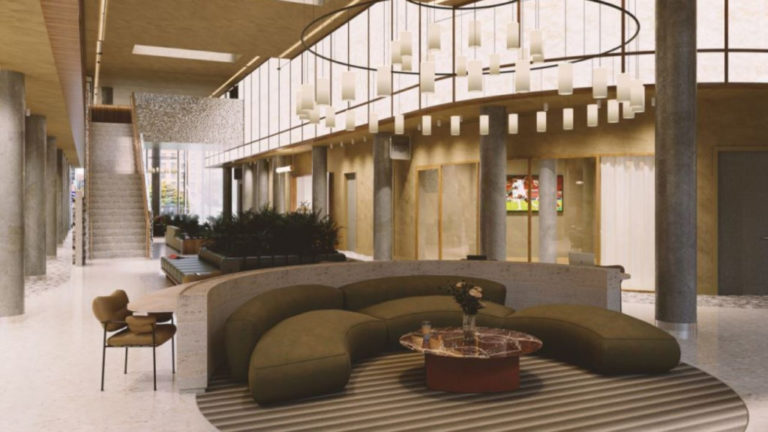
In response to this growing need for social connection, a new generation of workspaces is emerging across Britain. These environments are designed not only for productivity but also for fostering connections. Co-working hubs and hybrid workspaces are increasingly serving as social anchors for freelancers, entrepreneurs, and remote workers seeking the independence of remote work without the accompanying isolation.
In Milton Keynes, known for its burgeoning innovation and entrepreneurial community, venues like Unity Place exemplify this shift. With flexible workspaces, cafés, and communal areas designed to encourage social interaction over lunch or coffee, Unity Place has become a popular gathering spot for freelancers and hybrid professionals eager to reconnect during their working hours.
Kiana shared her experience of how these small interactions can significantly impact her work life. She recalled a recent moment at Unity Place’s café during a work call when another creative overheard her discussing editing work and initiated a conversation. “He just overheard me talking about editing and wanted to chat,” she said. “I loved that. He was my age too. I feel like we need so much more of that.”
Within many co-working communities, these spontaneous moments have evolved into rituals—informal chats at coffee machines or shared lunch tables replacing the traditional office watercooler. As remote and hybrid working continues to redefine professional life, the spaces where people work are also adapting. Rather than completely replacing offices, the future of work may lie in environments that blend flexibility with opportunities for human connection. The workplace may be changing, but the need for connection remains a constant.