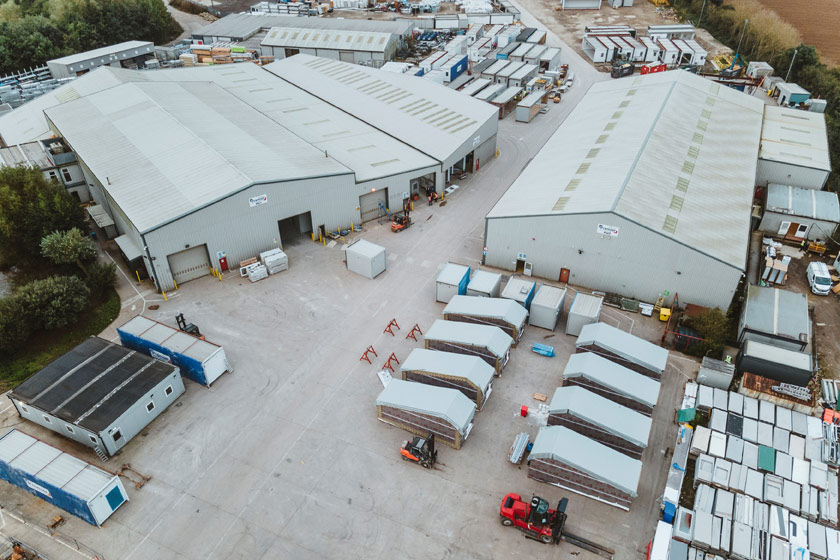
Premier Modular, a leading offsite manufacturer based in East Yorkshire, has been appointed as a supplier on seven lots of the ESPO Modular Buildings framework (953), a major public sector procurement initiative.
The national framework, managed by the public sector-owned professional buying organisation ESPO, aims to facilitate the design, manufacture, delivery, installation, and maintenance of modular buildings. It is intended to provide high-quality, future-proofed temporary and permanent infrastructure across the public sector.
Celebrating its 70th anniversary this year, Premier Modular has secured contracts for seven out of ten framework lots. These include the hire and purchase of modular healthcare and education buildings, as well as the purchase of modular catering, accommodation, and miscellaneous buildings.
Work under the framework is expected to continue through to 2028, encompassing the delivery and installation of a variety of units ranging from accommodation to site offices. The framework also allows for bespoke design projects tailored to specific public sector needs.
Premier Modular has a strong track record of responding to the evolving demands of the public sector. In the past year, the company delivered a new Community Diagnostic Centre at a War Memorial Hospital in Cheshire, supplied a large-scale temporary school to support the development of a permanent facility at Greenshaw High School, and secured a multi-million-pound contract to provide new security buildings at three major UK airports.
In 2025, Premier Modular was also appointed to the £1 billion NHS Commercial Solutions Framework, which supports the rapid and sustainable delivery of modular buildings across healthcare, housing, education, and other public facilities.
David Harris, Managing Director of Premier Modular, commented: “Being awarded a place on seven out of ten lots of the new ESPO framework reflects our commitment to delivering high-quality, flexible spaces across the public sector. As demand continues to increase, this opportunity allows us to support communities with more speed, more certainty and more sustainable outcomes exactly where they’re needed and matter most.”
He added: “By shifting more of the construction process offsite, we’re reducing disruption, improving quality control, and accelerating delivery times and helping reshape the built environment into something smarter, greener and more resilient for the future.”