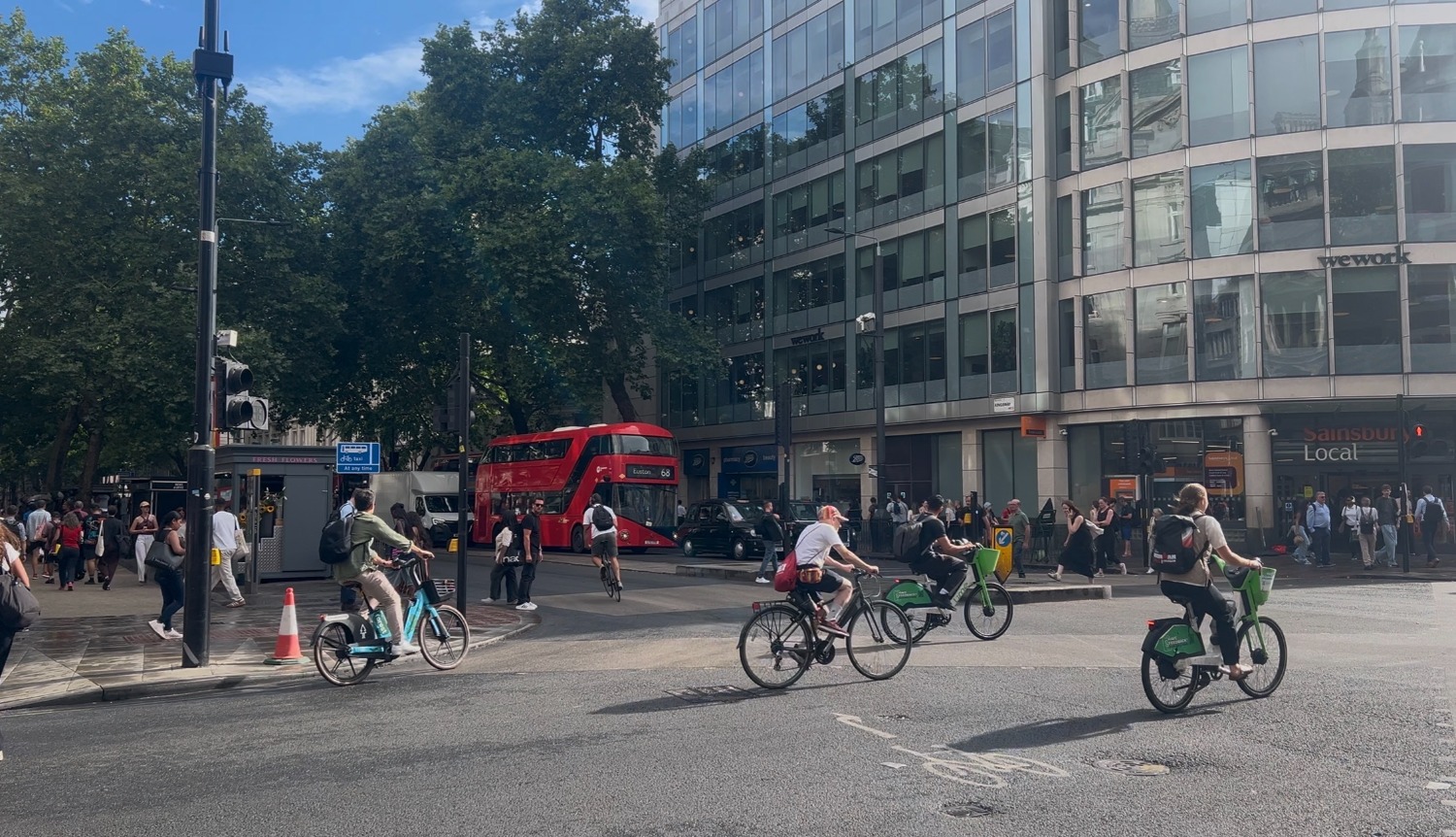
New research from Angelica Solutions reveals a significant disparity in road safety improvements between vehicle occupants and vulnerable road users in England. While casualties among drivers and passengers have dropped by 46% since 2010, the reduction for vulnerable road users—including pedestrians, cyclists, motorcyclists, and others—has been only 16%, leading to their increased share of those killed or seriously injured (KSI) on the roads.
The analysis, based on STATS19 police collision data, highlights that vulnerable road users now account for 57% of all KSI casualties, up from approximately 30% in 2010. This growing divide is evident across all 39 police force areas in England, with London experiencing the most pronounced rise. The City of London saw the proportion of vulnerable road user casualties increase from 78% to 88%, while the Metropolitan Police area reported a rise from 47% to 61%.
Other regions have also witnessed sharp increases in the proportion of vulnerable road user casualties between 2010 and 2024, including Merseyside (24% to 47%), Thames Valley (25% to 42%), Northumbria (24% to 39%), Durham (23% to 37%), Cheshire (24% to 36%), and Nottinghamshire (28% to 40%).
The findings come as the UK Government commits £4.5 billion through its latest Cycling and Walking Investment Strategy, aiming to raise the share of short journeys made by walking, wheeling, and cycling from 48% to 55%, and to increase the proportion of children who usually walk or cycle to school from 47% to 60%.
Sarah Vaughan, Director of Angelica Solutions, cautions that without corresponding improvements in road safety, the Government’s ambitions could inadvertently lead to a rise in serious casualties. “Our analysis suggests that unless road safety improvements keep pace with these ambitions, encouraging more people onto the roads could lead to an increase in the overall number of serious casualties,” she said.
Angelica Solutions modelled the impact of a 50% increase in walking and cycling while maintaining current injury rates. The projection indicates this could result in approximately 4,700 additional pedestrians and cyclists being killed or seriously injured annually in England.
Vaughan emphasised the uneven pace of safety advancements: “It’s not that our roads are becoming more dangerous, it’s that they’re becoming safer at different speeds depending on how you travel. We’ve made enormous progress protecting people inside vehicles through advances in vehicle safety, but pedestrians, cyclists and other vulnerable road users haven’t benefited to the same extent. If we want more people to choose active travel, we need to ensure investment in walking and cycling is matched by effective investment in making those journeys safer. Otherwise, we risk widening an already significant road safety gap.”