
How the humble stacking chair became the definitive object of modern interior life
There is a particular poetry to a well-designed stacking chair. Pulled from a neat column of its identical siblings, placed with a deliberate click against a polished concrete floor, and settled into by a guest who never once pauses to consider the engineering behind their comfort — it is, in the most refined sense, furniture that disappears into its own usefulness. And yet, look closer. The stacking chair is one of the great quiet revolutions of interior design: a marriage of spatial intelligence, industrial ingenuity, and, increasingly, genuine aesthetic ambition.
From the sunlit terraces of Mediterranean hospitality venues to the reconfigurable boardrooms of London’s financial district, the stacking chair has embedded itself so thoroughly into the fabric of contemporary interiors that its absence would feel, now, almost architectural. It is no longer simply a solution to a problem. It is a design statement — one that speaks to how we live, how we gather, and how we imagine the spaces around us.
A Market That Reflects How We Live
The numbers tell a story that every interior designer instinctively understands. The global stacking chair market, valued at approximately USD 2.93 billion in 2023, is on a confident upward trajectory toward USD 4.8 billion by 2032, growing at a compound annual growth rate of 3.95%. These are not merely figures in a financial forecast — they are the arithmetic expression of a cultural shift.
We are, as a society, living more fluidly. Open-plan offices that transform into evening lecture spaces; rooftop bars that double as event terraces at weekends; homes with dining rooms that expand to accommodate twelve for a Sunday gathering and contract back to four on a Tuesday evening. The stacking chair is not incidental to this transformation. It is its most elegant enabler.
The Asia-Pacific region leads the charge, commanding approximately USD 2.3 billion of the total global market in 2024, driven by the extraordinary pace of urbanisation in China, India, and Japan. With a projected CAGR of 7.2% — outpacing every other region — the East is writing the next chapter of the stacking chair’s ascent. It is, perhaps fittingly, a region where the philosophy of purposeful minimalism has long been woven into the cultural fabric.
“The stacking chair is not incidental to our more fluid way of living. It is its most elegant enabler.”
Material World: The Substance Beneath the Style
Ask any seasoned furniture editor to describe the stacking chair landscape and they will likely begin with plastic — a word that, in lesser hands, might carry a dismissive air but here demands to be reconsidered with fresh eyes. Polypropylene and reinforced polymers account for half of all stacking chairs sold globally, and it is not difficult to understand why. The best plastic chairs achieve something remarkable: they look almost too refined to be practical, and yet they are precisely, defiantly, practical.
Timber, accounting for roughly 30% of the market, brings a different conversation entirely. In an interior context, the wood stacking chair occupies a particularly interesting position: it carries the warmth and tactility that hospitality designers crave — that sense of material truth, of something grown and shaped by hand — while still submitting to the pragmatic demands of volume and storage. Beech bentwood remains the classic substrate, its steamed curves as relevant in a Scandi-influenced café as they were in a Viennese coffeehouse a century ago.
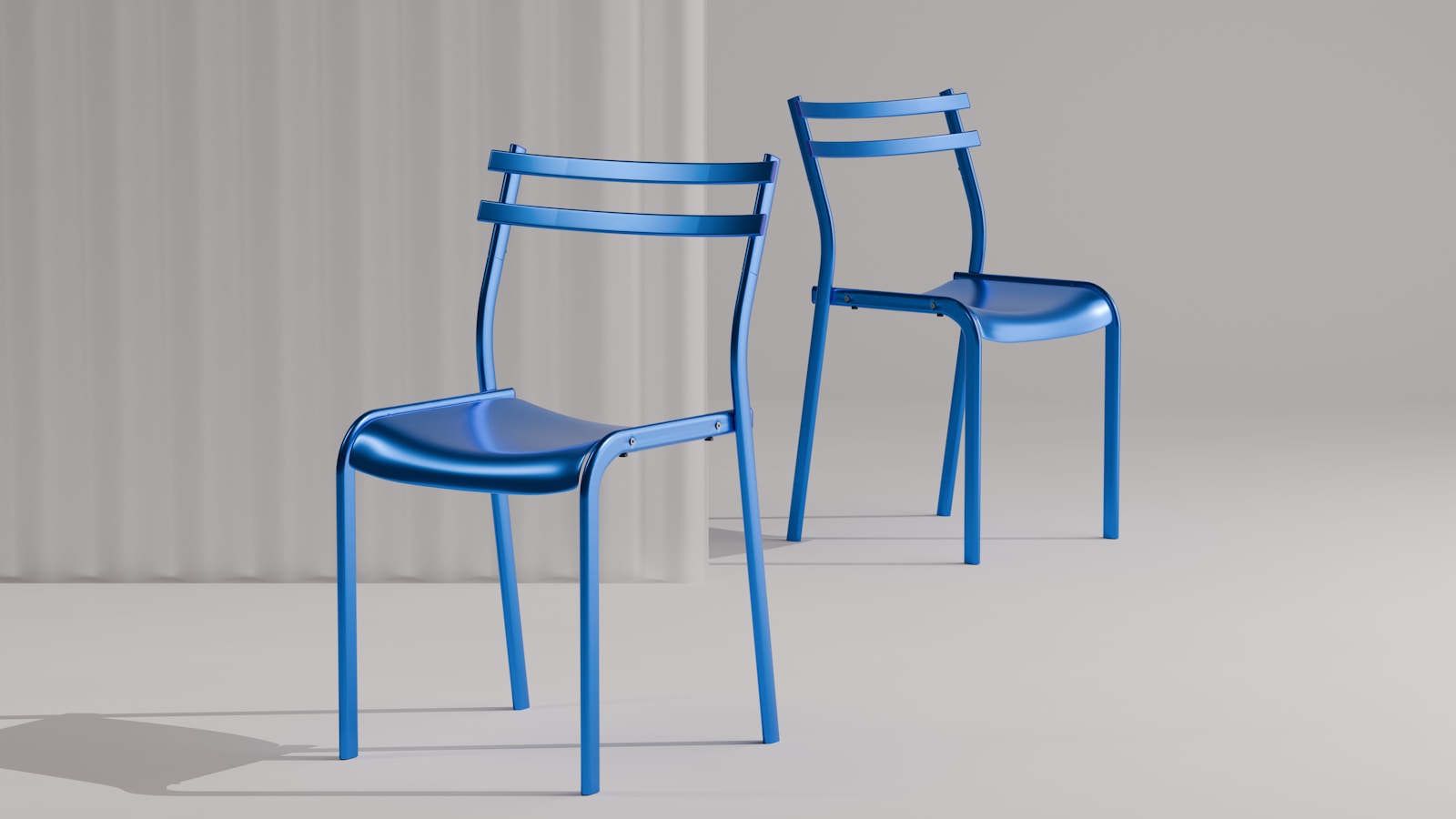
Metal and composite materials complete the picture, representing the remaining fifth of the market and serving, with particular distinction, the demands of outdoor and contract furniture. Powder-coated aluminium frames — lightweight, corrosion-resistant, endlessly colour-customisable — have become the backbone of outdoor hospitality design, from the cobalt blue terraces of the Greek islands to the monochromatic courtyard gardens of Shoreditch.
- 50% of the market belongs to polypropylene and polymer chairs
- 30% carved from wood — bentwood, beech, and beyond
- 20% metal and composite — the language of outdoor living

Design Language: Ergonomics Meets Aesthetics
There was a time — not so long ago — when to specify a stacking chair in a residential interior was considered a confession of limitations. A temporary measure. A budget solution politely dressed up and quietly apologetic about its origins. That time has passed, and the shift is not merely cosmetic.
The finest contemporary stacking chairs are exercises in rigorous ergonomic thinking. Manufacturers have invested significantly in the science of how the human body sits — the necessary lumbar support for extended occupancy, the ideal rake of a seat pan for spinal neutrality, the subtle curvature of a backrest that makes an hour at a conference table feel like twenty minutes. Brands including Vitra, Muuto, Hay, and Mater have each produced stacking designs that could hold their own in any considered residential interior, where the conversation is about craft, proportion, and material intelligence.
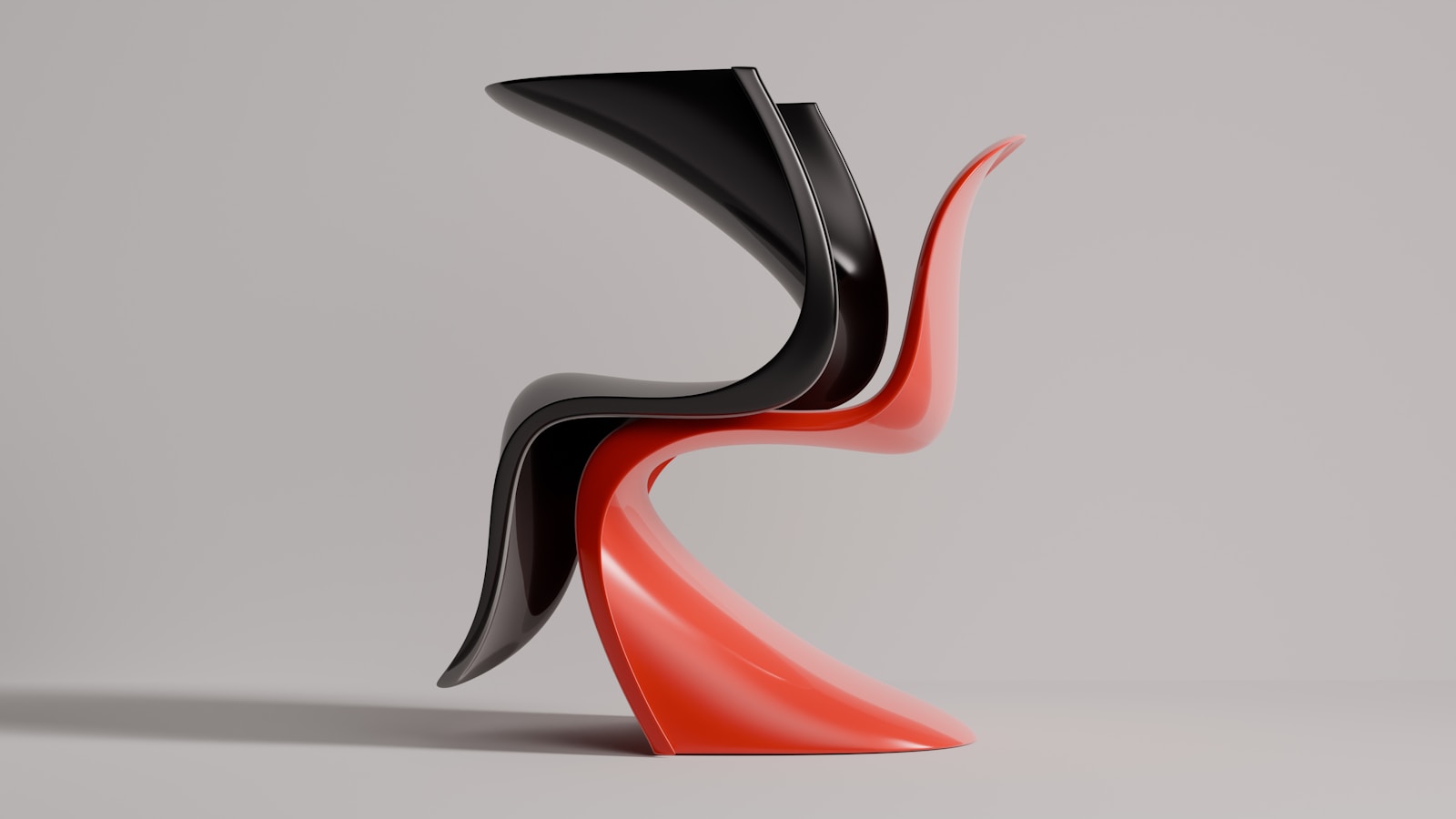
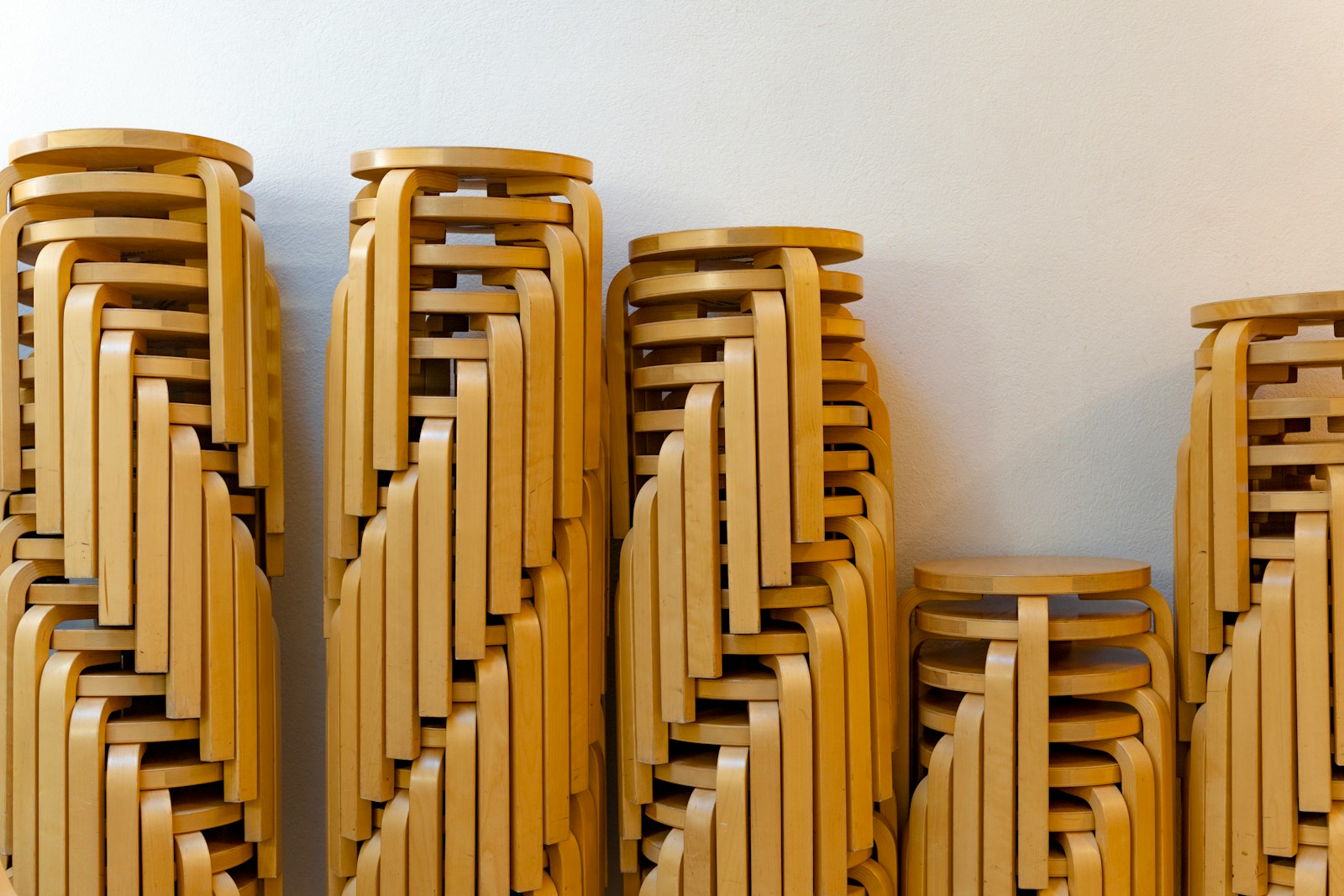
It is also worth noting what ergonomic ambition does for a room. A well-specified stacking chair — one with a considered silhouette and a material quality that rewards close inspection — contributes to the interior’s overall composition in a way that purely functional seating never can. The stack itself — three, four, five chairs nested in perfect geometric rhythm against a wall — becomes, in the right space, an objet trouvé. A moment of accidental sculptural beauty.
“The stack itself — chairs nested in geometric rhythm — becomes, in the right interior, an objet trouvé.”
Commercial Applications: Where Flexibility Is Architecture
Commercial interiors account for 60% of all stacking chair demand, a dominance that reflects a fundamental truth about modern institutional space: the most valuable square metreage is the kind that can be entirely reinvented at a moment’s notice. Conference halls that seat three hundred for a morning keynote and a hundred and fifty for a roundtable dinner. University lecture theatres that accommodate full cohorts in the mornings and examination conditions in the afternoons. Hotel ballrooms that transition from white-cloth gala dinners to black-box theatre performances over the course of a single weekend.
In each of these contexts, the stacking chair is not merely a practical convenience — it is a spatial strategy. Interior designers working at the contract scale have long understood that specifying the right stacking chair is among the most consequential decisions in a project. The wrong choice — too heavy for efficient relocation, too visually complex to recede when the room demands a neutral backdrop, too delicate for the rigours of repeated handling — can undermine an entire interior scheme.
The growth of the educational sector deserves particular attention. New school and university builds, along with the wholesale reconfiguration of existing campuses, have created substantial demand for seating solutions that respond to evolving pedagogical philosophies. Gone are the rigid, forward-facing rows of the traditional lecture hall. In their place: fluid arrangements of moveable seating that cluster, splay, and reassemble in service of collaborative learning. The stacking chair, here, is not ancillary to the educational experience. It is part of its architecture.
The Residential Conversation: Forty Percent, and Growing
It would be a mistake to read the residential market’s 40% share as secondary. In absolute terms, as the overall market expands toward its USD 4.8 billion horizon, the residential segment represents a significant and increasingly sophisticated audience — one that has, in many respects, become the design industry’s most discerning client.
The contemporary home owner or renter is alert to the stacking chair’s potential in a way that previous generations were not. Credit, in part, the influence of the hospitality design aesthetic that has so thoroughly colonised residential interiors over the past decade. We furnish our homes now with the considered intentionality of boutique hotel operators: every piece a choice, every material a statement, every object capable of justifying its place in the room.
The stacking chair fits this sensibility with particular ease in smaller urban living spaces, where every square foot must perform multiple functions. A dining chair that can accommodate a dinner party of eight and disappear into a slim column in a hallway cupboard the following morning is not a compromise — it is an intelligent solution, arrived at through careful design thinking.
Sustainability: The New Material Standard
The interior design industry has never been more conscious of the environmental implications of its material choices, and the stacking chair market is responding with a seriousness that goes beyond marketing language. Manufacturers across the sector are investing in recycled and bio-based polymer formulations, FSC-certified timber sourcing, and end-of-life take-back schemes that ensure the product’s lifecycle is considered in full, from initial manufacture to eventual disassembly.
The consumer appetite for sustainable furniture is both real and commercially significant. Research suggests that 66% of consumers are willing to pay a premium for products they understand to be environmentally responsible — a figure that tracks almost precisely with the premium tier of the stacking chair market, where the intersection of ecological thoughtfulness and design excellence is increasingly the standard rather than the exception.
For interior designers, sustainability in stacking chair specification has a practical dimension beyond the purely ethical. Clients — particularly large institutional and corporate clients with formal ESG reporting requirements — are requesting materials certifications, carbon footprint assessments, and supply chain transparency documentation as a matter of course. The designer who can navigate this landscape fluently will find themselves significantly advantaged.
Intelligence Built In: The Smart Chair Horizon
The intersection of furniture design and digital technology is a frontier that has, until relatively recently, felt more speculative than real. Chairs that adjust their geometry in response to biometric feedback; seating that integrates seamlessly with the AV and digital collaboration infrastructure of a modern conference environment; upholstered surfaces embedded with sensors that gather occupancy and wellbeing data for facilities managers. These are not fantasies drawn from a distant future. They are products in active development, and several are already arriving in the market.
For the stacking chair specifically, the most immediate applications are practical rather than speculative. RFID-tagged frames that allow facilities teams to manage and track large seating inventories in real time. Modular connector systems that allow chairs to be configured into linked rows with the simplicity of a snap mechanism. Frame geometries engineered to integrate with smart-floor charging pads for small attached devices.
The design challenge — and it is a genuine one — is ensuring that none of this intelligence comes at the expense of the quality that makes a chair worth specifying in the first place. The manufacturers who crack this problem — and some are very close — will define the next era of the stacking chair.
“The intelligent stacking chair is one that acknowledges the complexity of its environments and helps them manage themselves.”
Navigating the Competitive Landscape
The stacking chair’s principal competitor is, paradoxically, the folding chair — a product that shares its core proposition of compactible, storable seating but diverges sharply in structural integrity, design potential, and long-term durability. While folding chairs retain a decisive cost advantage at the lowest tier of the market, the premium and mid-market segments are firmly the stacking chair’s territory, and the gap is widening as design investment continues to flow into the category.
Raw material price volatility remains a genuine challenge across the sector. Polymer pricing is closely tied to petrochemical markets; timber costs reflect both supply chain dynamics and the increasing premium placed on certified sustainable forestry. Manufacturers are absorbing these pressures through a combination of design efficiency — engineering out waste in production, simplifying component counts, investing in tooling that extends product life cycles — and strategic pricing adjustments that, at the premium end, are generally accepted by clients who understand the economics of quality furniture.
A Buyer’s Eye: What to Look For
For designers and specifiers approaching a stacking chair selection, the criteria are both technical and aesthetic — and the best decisions emerge from holding both in focus simultaneously. Weight is the first practical consideration: a chair that stacks beautifully but requires two people to move is a liability in any setting where rapid reconfiguration is the operating model. The sweet spot for most contract applications is in the 3–5 kilogram range.
Stack height — the vertical space required per additional chair in a column — is the second arithmetic reality to address early. A chair that adds 8 centimetres per unit to a column will store six chairs in the same footprint that accommodates only four chairs adding 12 centimetres. In large inventories, these differences are meaningful.
Aesthetically, the question is less about finding a chair that is beautiful in isolation and more about identifying one whose beauty persists across contexts. A chair that reads beautifully in a product photograph but becomes visually aggressive when placed in multiples of forty; a design that works in blonde oak but has no convincing alternative in a darker palette — these are the misalignments that separate a considered specification from an impulsive one.
The Long View
The stacking chair has survived a century of radical change in how we design, furnish, and inhabit our spaces. It has survived the rise and fall of multiple design movements, the disruption of global supply chains, the near-complete transformation of how and where we work, and the perpetual reinvention of what it means to gather. It has done so not through stubbornness or inertia, but through an intrinsic adaptability that is, when you consider it, precisely the quality that defines great design.
As the global market reaches toward USD 4.8 billion and manufacturers invest in the next generation of materials, technologies, and formal languages, the stacking chair shows every sign of continuing to evolve with the same restless intelligence that has always characterised it. The best stacking chair, as any designer who has lived with a truly exceptional example will tell you, is not the one you notice — it is the one you never want to replace.
It disappears into its own excellence. And in doing so, it allows the room around it to be exactly what it needs to be.
Market data sourced from Global Stacking Chair Market Report 2024 and Allied Market Research.