Bristol’s escalating housing costs are increasingly jeopardising the city’s ability to attract and retain skilled workers, posing a significant threat to its economic development, according to regional placemaking leaders.
Dr Anna Farthing, cultural placemaking consultant and former Interim Head of Place at Bristol BID, identified housing affordability as the primary challenge undermining Bristol’s growth potential. Speaking at a breakfast event hosted by professional services firm Knights, she urged city leaders to explore alternative approaches to unlock progressive development projects.
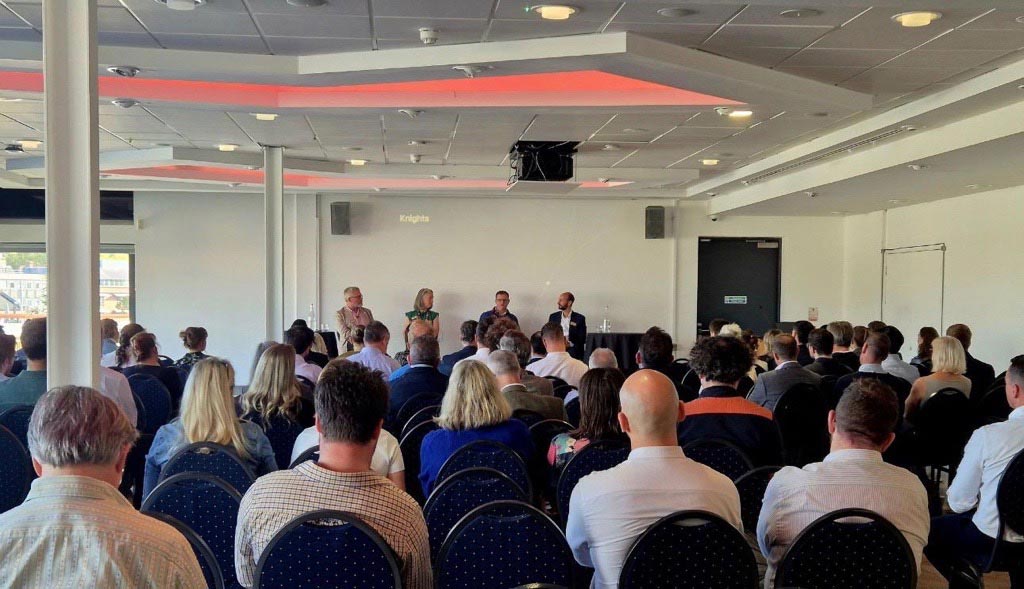
The event, held at the M Shed overlooking Bristol’s harbourside, featured a panel discussion with Dr Farthing, Nick Sturge MBE, Co-Chair of the West of England Business Board, and Alex Hearn, Director Economy of Place at Bristol City Council. The discussion focused on balancing ambitious regeneration with preserving Bristol’s unique character, heritage, and identity.
Dr Farthing highlighted the limitations of large-scale development schemes, noting their vulnerability to economic fluctuations and political cycles. She advocated for a more iterative approach, suggesting the city pilot and trial consumer demand through temporary projects that could become permanent if successful.
“If the established ways of doing things are not working, try something else,” Dr Farthing said. “Bristol, with its history of non-conformism and social justice, is a natural place to explore innovative models. Building trust between social entrepreneurs and development professionals could unlock fresh thinking.”
She emphasised that housing costs—whether for renting or purchasing—are the most significant factor affecting Bristol’s ability to flourish economically and culturally. Dr Farthing warned that graduates, key workers, social entrepreneurs, and creative industry professionals are increasingly finding more affordable accommodation in other cities, including London, Leeds, Sheffield, and Nottingham, which now rival Bristol’s cultural offerings.
Alex Hearn stressed the need for a regional strategy to create a “credible pipeline” of housing and regeneration projects. He acknowledged the challenges posed by rising construction and borrowing costs, regulatory changes, and viability pressures, which make development more difficult than in previous years.
“Bristol is ambitious for the future and has significant opportunities for growth,” Hearn said. “We need to keep investing in homes, transport links, and employment spaces to support this growth while addressing affordability. Failure to do so risks undermining the qualities that attract people and investment.”
Hearn also emphasised that heritage should not be seen as an obstacle to growth but integrated into the city’s future development. “By involving communities early and understanding what people value about an area, we can build on its identity while delivering the homes, jobs, infrastructure, and public spaces Bristol needs.”
Dr Farthing described Bristol as a city defined by its independent spirit and innovation. “The city is at its best when it stands up for something and does things differently. By collaborating, Bristol can apply the same approach to land, property, and development.”
Nick Sturge highlighted the importance of cross-boundary cooperation across the West of England region to foster inclusive growth. He stressed that while heritage is vital, it should not hinder development that supports social and economic progress.
“Understanding Bristol’s role within the wider Cardiff, Bristol, Bridgwater, Cheltenham sub-region is crucial,” Sturge said. “We must be strategic about operating across political boundaries and ensure housing, transport, and education systems provide a diverse talent supply.”
He pointed to the Engine Shed project as an example of leveraging physical and social heritage to drive economic growth aligned with the city’s cultural strengths. “Despite challenges, in true Bristol spirit, these will be overcome.”