Major clean energy projects proposed for the Humber may not proceed unless the Government provides investors with clear, stable policy and incentives, Humber Freeport chief executive Simon Green told a climate summit in York.
Green said the region had significant opportunities in the energy transition, including proposed investment in Sustainable Aviation Fuel (SAF), hydrogen and associated low carbon infrastructure. Without the right conditions, he warned, global companies could “simply look elsewhere.”
“The energy transition is a global issue but, for industry to deliver and invest in our region, they need the certainty and the confidence which comes from Government policy. The longer the Government takes to provide that policy stability, the less likely it is that major projects proposed in the Humber become a reality,” Green said.
“Speed of delivery, and the application of policy, is critical. The policy shift needs to focus on the incentives which we provide to businesses looking to invest in the UK. If we don’t provide that support, then companies will simply look elsewhere.”
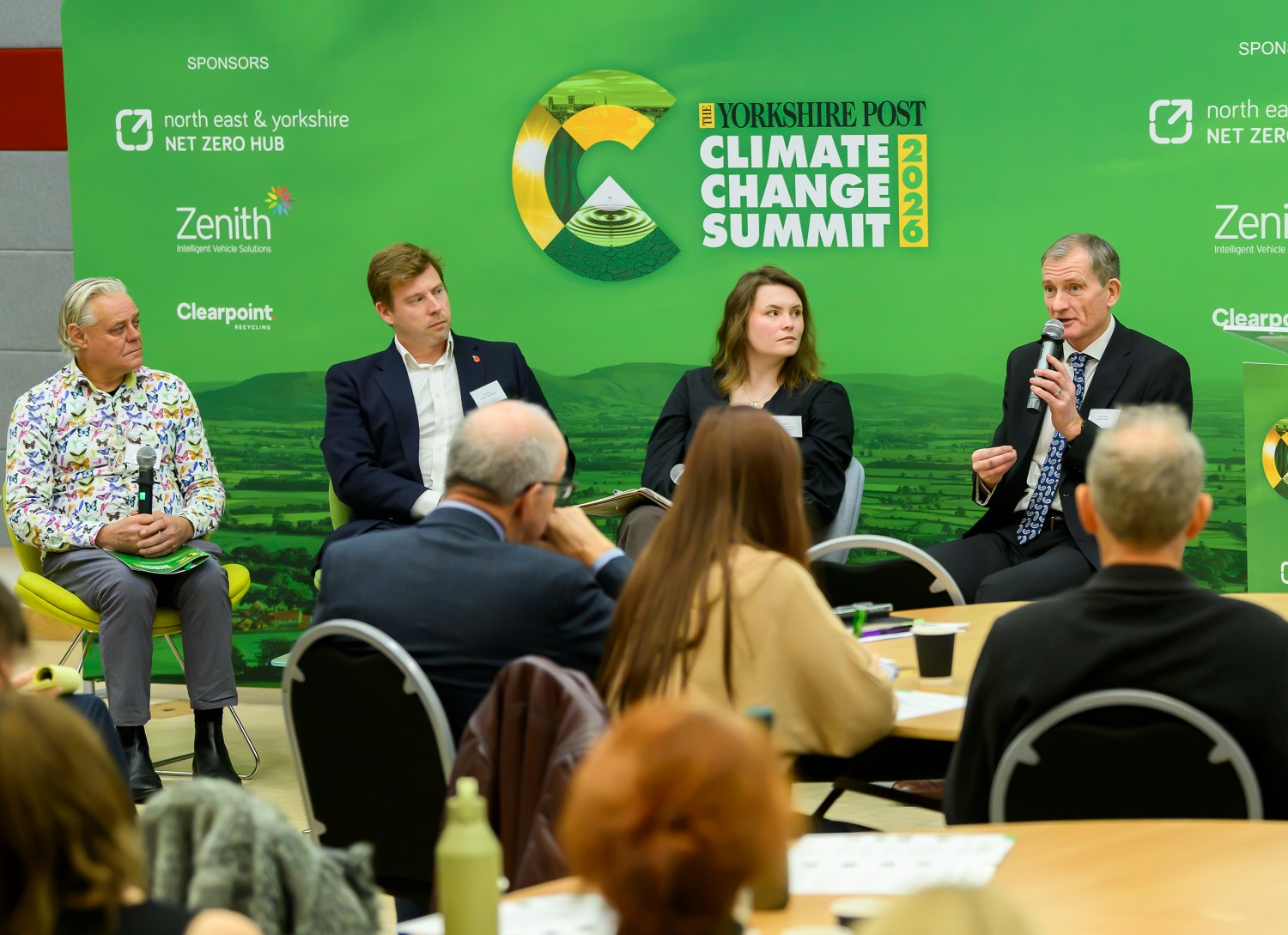
Green spoke at the Yorkshire Post Climate Change Summit, held at the National STEM Learning Centre in York. He joined a panel with Dr Iain Harris, managing director of the Humber Energy Board, Lucy Allis, Interim Strategy Manager for Low Carbon and Environment at the York and North Yorkshire Combined Authority, and Ian Emberton, director of solar energy specialist Xerogrid.
The discussion examined Yorkshire’s potential as a clean energy powerhouse, with much of the conversation focused on the Humber. Green said the estuary emits four times more carbon than any other estuary in the UK, and described the region’s response as collaborative.
“There was a realisation, rightly, that we need to do something about it, and the region has since worked very effectively in a collaborative way to respond to the challenge. There will not be a silver bullet for that challenge – it’s about finding the collective solutions that will take the region forwards,” he said.
Harris said the Humber had the people, natural resources, skills and companies to support the energy transition and reindustrialisation, but investment depended on long-term certainty.
“For a long time, fiscal stability was a key advantage for the UK when it came to attracting international investment. In the last few years, though, that has changed and those companies are perhaps looking at us in a different way,” he said.
“The investments we are talking about securing are multi-billion pound projects. For that to happen, companies need certainty for 20 or even 30 years, and at the moment that is extremely hard to find.”
Green also pointed to investment at Hull-based manufacturer Ideal Heating. Humber Freeport seed capital funding supported the development of the company’s £20m UK Technology Centre in Hull, an R&D facility focused on product development and low carbon technology in the heating industry.
He described Ideal as “a great example” of low carbon innovation and called the investment “an investment which the region should be very proud of”.
The summit, now in its sixth year, brought together delegates from industry, academia and local government, as well as members of the public, to discuss the region’s progress in reducing emissions and adopting low carbon solutions.