

Humidity Humidity: What It Means and How to Fix Damp in Your Home
It starts with a patch on the ceiling or a musty smell you can’t quite place. Before long, wallpaper is peeling, windows are streaming with condensation, and you’re Googling ‘damp’ at midnight. The culprit? Humidity. Humidity is one of the most misunderstood forces at work inside your home — and one of the most damaging. This guide explains everything you need to know.
What Exactly Is Humidity?
Humidity refers to the amount of water vapour present in the air. In everyday domestic life, we tend to talk about relative humidity — expressed as a percentage — which describes how much moisture the air holds relative to the maximum it could hold at a given temperature. When that figure climbs too high, surfaces in your home start to collect moisture, and the problems begin.
Here is where the phrase ‘humidity humidity’ becomes something more than a simple repetition: it captures the way the problem compounds itself. High humidity. Humidity that goes unchecked creates the conditions for mould, rot, and structural damage. It also affects our health, our sleep, and our well-being in ways that many homeowners don’t immediately connect to the air around them.
The World Health Organisation recommends that indoor relative humidity be kept between 40% and 60% for optimal health and comfort. Above 60%, the risk of mould growth increases sharply. Below 40%, the air becomes too dry — causing skin irritation, static electricity, and damage to wooden floors and furniture. In the UK, where our climate is famously damp and our housing stock famously old, keeping humidity within that sweet spot is a daily challenge.
The Hidden Sources of Indoor Humidity
One of the most surprising things homeowners learn is just how much moisture ordinary daily life produces. A single person breathing generates roughly half a litre of water vapour per night. Cooking, bathing, doing laundry, even watering houseplants — all add moisture to the indoor atmosphere. Over the course of a day, a family of four can introduce eight to twelve litres of water into their home’s air.
That moisture has to go somewhere. In a well-ventilated, energy-efficient home, it escapes through controlled airflow and extraction. In an older or poorly ventilated property, it lingers — turning into condensation on cold surfaces, seeping into walls, and eventually fostering mould growth. The relationship between moisture and air is fundamentally one of humidity. Humidity that builds inside your home is the direct result of trapped vapour with nowhere to go.
Some properties also suffer from structural damp — moisture entering from outside rather than being generated within. Rising damp occurs when groundwater travels upward through a building’s masonry by capillary action. Penetrating damp comes from rain and moisture driving through walls, around poorly sealed windows, or through failing rooflines. Both forms are distinct from condensation, though they can overlap and exacerbate each other.
Recognising the Signs: How to Spot a Humidity Problem
Many homeowners first notice a damp problem when it has already reached an advanced stage. The earlier you can identify the symptoms, the simpler — and cheaper — the fix. Here is what to look for, room by room.
Condensation on Windows and Walls
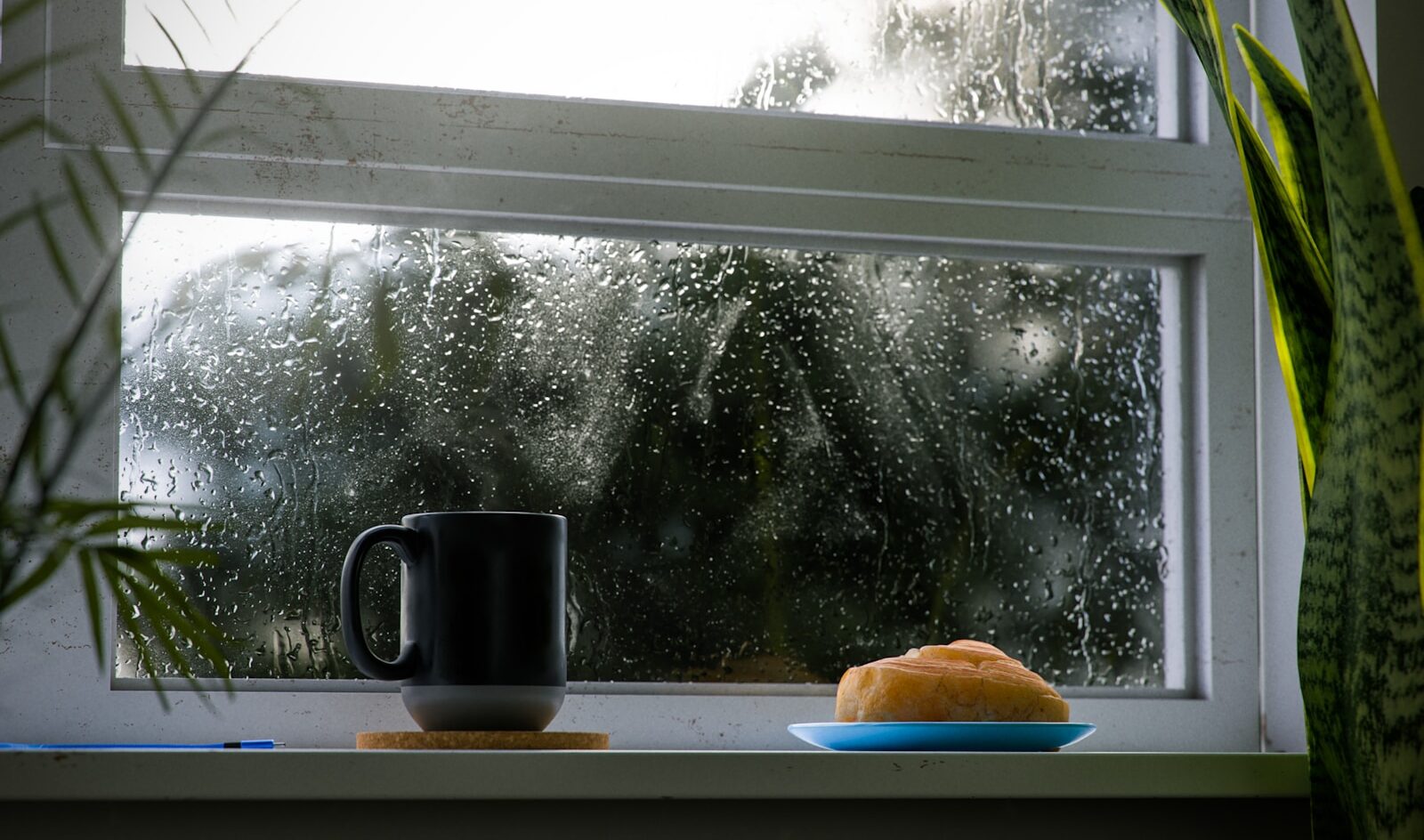
Streaming windows on a cold morning are a classic indicator of elevated indoor humidity. Humidity condenses when warm, moist air meets a cold surface — the glass acts like a barometer for the air quality in your room. If you are wiping down your windows every morning, your ventilation is insufficient.
Mould Growth
Black mould — technically Stachybotrys chartarum — is the most visually alarming symptom of a humidity problem. Humidity above 70% for sustained periods provides the conditions mould needs to thrive. It typically appears first in corners, around window frames, behind furniture positioned against external walls, and in bathrooms and kitchens where steam is regularly produced.
Peeling Wallpaper and Blistering Paint
When moisture infiltrates the layers beneath your décor, adhesion fails. Wallpaper lifts at the seams and corners; paint blisters and flakes. This is both an aesthetic problem and a structural warning sign. The source may be rising damp from below or penetrating damp from an external wall — or it may simply be unmanaged humidity. Humidity-related peeling tends to occur most prominently on external walls and in rooms without adequate ventilation.
Musty Smells and Stale Air
A persistent musty odour — even when a room looks clean — often indicates mould growing in hidden areas: behind plasterboard, beneath floorboards, inside wall cavities. The smell is produced by microbial volatile organic compounds (mVOCs) released as mould metabolises organic material. Do not ignore it and do not mask it with an air freshener.
Why It Matters: The Health Case for Fixing Damp
The consequences of living with chronic damp extend well beyond inconvenience or cosmetic damage. The health implications — particularly for children, the elderly, and those with respiratory conditions — are well-documented and serious.
Mould spores released into the air are known to trigger asthma attacks, cause allergic rhinitis, and exacerbate chronic obstructive pulmonary disease (COPD). High indoor humidity also increases the population of dust mites, whose droppings are among the most common household allergens. Meanwhile, the cold that often accompanies damp homes — because moisture in walls reduces their insulating capacity — creates additional health risks, particularly in winter.
A landmark study published in the Lancet in 2021 estimated that poor housing conditions — including damp and mould — are responsible for significant excess illness across the UK each year. High indoor humidity, humidity that is left unaddressed in the home, costs the NHS hundreds of millions of pounds annually in related treatment costs. The tragic case of two-year-old Awaab Ishak in 2020, who died as a result of prolonged exposure to mould in a social housing property in Rochdale, prompted legislation — now known as Awaab’s Law — requiring social landlords to address damp and mould within strict timeframes.
Measuring Humidity in Your Home
Before reaching for a dehumidifier, it is worth knowing exactly what you are dealing with. A hygrometer — available for as little as £10 to £15 — measures relative humidity accurately and gives you a baseline reading for each room. Place one in your bedroom, living room, kitchen, and bathroom for a week to build a picture of where your humidity problems are concentrated.
Damp meters are a more targeted diagnostic tool, measuring the moisture content in walls, ceilings, and floors. A reading above 17% moisture content in timber suggests a problem; masonry readings vary by material, but most surveyors use a relative scale to identify areas of concern. If you are considering buying a property, or you suspect structural damp rather than condensation, commissioning a professional damp survey is a worthwhile investment. A chartered surveyor will be able to distinguish between rising damp, penetrating damp, and condensation — three problems that look similar but require very different solutions.
How to Fix Damp: A Room-by-Room Strategy
The good news is that most humidity-related damp problems are fixable — and many are fixable without expensive structural work. The key is to address both the source of the moisture and the conditions that allow it to build up.
Bathrooms and Kitchens
These are the two rooms where moisture is generated most intensively. Extractor fans are not optional — they are essential. Building regulations require mechanical ventilation in bathrooms and kitchens, but many older homes have underperforming fans or none at all. A fan rated at 15 litres per second for bathrooms and 30 litres per second for kitchens is considered minimum. Run the fan during and for at least 20 minutes after bathing or cooking, and ensure it vents externally rather than into a loft space or wall cavity.
Bedrooms
We spend around eight hours a night in our bedrooms, breathing, perspiring, and releasing moisture into the air. Open a window for at least ten minutes each morning to flush out overnight humidity. Humidity that lingers in a closed bedroom overnight regularly causes condensation on cold external walls — particularly behind wardrobes and headboards positioned flush against outside-facing surfaces. Leave a gap of at least 50mm between furniture and external walls to allow air circulation.
Living Rooms and Hallways
Homes that have been sealed for energy efficiency — with draught-proofing, double glazing, and insulated walls — often struggle with inadequate background ventilation. Trickle vents in window frames allow a continuous flow of fresh air without draughts; if yours are blocked or absent, consider having them fitted. Whole-house ventilation systems, such as MVHR (Mechanical Ventilation with Heat Recovery), represent a more comprehensive solution for new builds and major renovations, recovering heat from outgoing air while introducing fresh, filtered air throughout the property.
Dehumidifiers
A portable dehumidifier can be an effective short-term measure, particularly in rooms where ventilation improvements are not immediately possible. Refrigerant dehumidifiers work best in warmer rooms (above 15°C), while desiccant models perform better in cooler conditions — making them more suitable for garages, lofts, and conservatories in the British climate. Look for a model with a built-in humidistat, so it cycles on and off to maintain a target humidity rather than running continuously.
Addressing Structural Damp: When to Call a Professional
If improved ventilation and moisture management do not resolve the problem within a few weeks, you may be dealing with structural damp rather than — or as well as — condensation. This requires professional assessment and, often, professional remediation.
Rising damp is treated by installing or reinstating a damp proof course (DPC) — a physical or chemical barrier inserted into the masonry to prevent upward moisture migration. Penetrating damp typically requires external repairs: repointing mortar joints, replacing cracked render, resealing around windows and doors, or attending to roof and gutter defects that allow water to enter the building envelope. In all cases, affected plaster should be removed, the wall allowed to dry thoroughly, and salt-resistant renovation plaster applied before redecoration.
Be cautious of companies that diagnose rising damp in every property they survey — it is far less common than the damp-proofing industry sometimes suggests, and misdiagnosis leads to expensive, unnecessary treatments. An independent survey from a RICS-accredited surveyor, who has no financial interest in selling you a remediation package, is always the safest starting point.
Long-Term Solutions: Building a Less Humid Home
Managing indoor humidity is not a one-off fix — it is an ongoing aspect of maintaining a healthy home. Think of it as you would a garden: regular attention prevents problems from taking hold. Here are the habits and upgrades that make the biggest long-term difference.
Dry laundry outdoors or in a tumble dryer vented externally. Drying a single load of washing indoors adds approximately 1.5 litres of moisture to the air — a significant contribution to excess indoor humidity. Humidity generated by indoor drying is one of the most easily avoidable domestic moisture sources, yet it remains one of the most common in UK households during the colder months.
Maintain consistent heating. Cold rooms are condensation traps — warm air can hold more moisture, so keeping rooms at a steady temperature rather than allowing them to drop overnight reduces the risk of moisture depositing on cold surfaces. Use lids on pots when cooking, and run cold water into a bath before adding hot water to reduce steam production.
Invest in insulation. Properly insulated walls, roofs, and floors stay warmer, reducing the number of cold surfaces on which moisture can condense. Cavity wall insulation, solid wall insulation (internal or external), and loft insulation all contribute to drier, warmer surfaces — reducing both damp risk and energy bills simultaneously.
Final Thoughts
The phrase ‘humidity humidity’ might sound like a quirky repetition, but it captures something true about the nature of the problem. Humidity compounds; humidity that is ignored grows into something far more serious than a foggy mirror or a damp patch on the ceiling. It becomes a structural issue, a health issue, and — eventually — a financial one.
The good news is that the tools, knowledge, and solutions available to homeowners have never been better. A £12 hygrometer, a properly installed extractor fan, and the habit of opening windows each morning can transform the air quality in a home. For more serious structural problems, professional help is available — and the sooner you act, the less damage there is to undo.
Your home should be a sanctuary. Don’t allow it to be damaged by rising humidity — humidity that creeps up unnoticed through the seasons — sort it.
References
World Health Organisation (2009). WHO Guidelines for Indoor Air Quality: Dampness and Mould. Geneva: WHO Press. Available at: www.who.int/publications/i/item/9789241547857
Public Health England (2021). Identifying and Managing Damp and Mould in Residential Buildings. London: PHE Publications.
Mudarri, D. and Fisk, W.J. (2007). ‘Public health and economic impact of dampness and mould’. Indoor Air, 17(3), pp.226–235.
RICS (Royal Institution of Chartered Surveyors) (2023). Damp and Condensation in Buildings: A Practical Guide. London: RICS Publishing. Available at: www.rics.org
UK Parliament (2023). Social Housing (Regulation) Act 2023 — Awaab’s Law provisions. London: HMSO. Available at: www.legislation.gov.uk
Energy Saving Trust (2024). Condensation and Damp in the Home. Available at: www.energysavingtrust.org.uk
Building Research Establishment (BRE) (2022). The Cost of Poor Housing in England. Watford: BRE Press.