
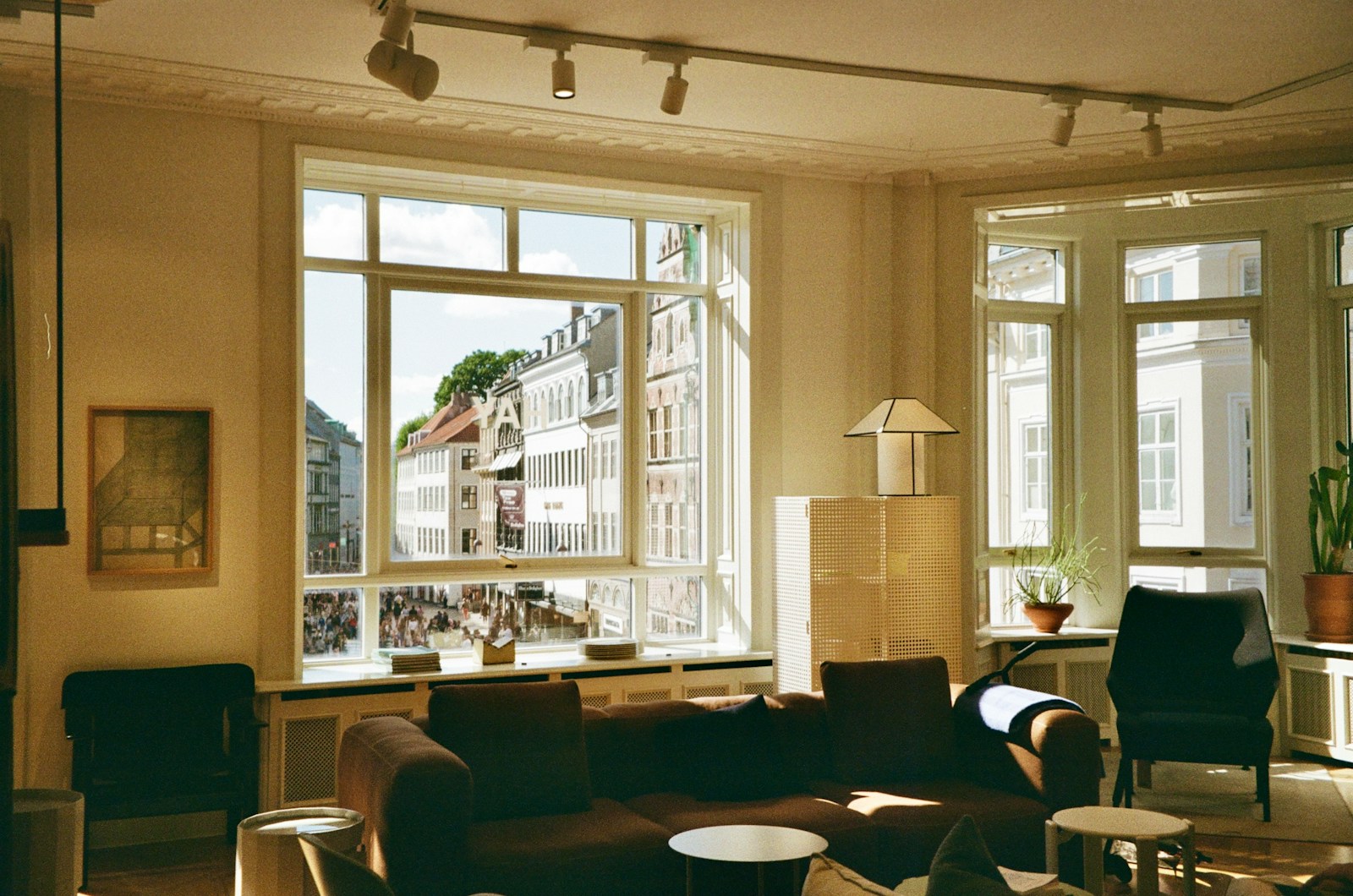
There is a moment, usually about twenty minutes into a visit to a well-designed Scandinavian home, when you stop noticing the individual things and start noticing the feeling. You are warm but not stuffy. The light is doing something interesting near the window. There are probably candles, even in the afternoon. Nothing is shouting at you. It sounds almost laughably simple when you write it down, and yet it is genuinely difficult to achieve — as anyone who has tried to replicate it in a Victorian terrace in Leeds or a new-build apartment in Atlanta will tell you.
Nordic interiors have been having a cultural moment for about fifteen years now, which at this point is long enough that you’d expect the trend to have peaked and collapsed. It hasn’t. If anything, the global appetite for the considered, restrained, material-honest aesthetic associated with Denmark, Finland, Norway, and Sweden has grown wider and more serious. The question worth asking is why. Not in a vague, hand-wavy way, but specifically: what is it about the way people in Copenhagen and Helsinki and Reykjavik arrange their homes that the rest of the world keeps trying to learn?
It Started With a Very Particular Problem
You cannot understand Nordic interior design without understanding Nordic winter. In Helsinki, the sun sets before 3pm in December. In Tromsø, Norway, it doesn’t rise at all for two months. This is not a minor inconvenience you accessorise around. It is a defining condition of daily life, and it has shaped how people in these countries think about home — what it should feel like, what it should do for the people inside it — over centuries.
The Finnish concept of hygge‘s lesser-known cousin, kalsarikänni (roughly: the particular pleasure of staying home in your underwear, drinking), is partly a joke and partly not. The Danes have made hygge internationally famous, though they’d probably be the first to point out that most of the books written about it by non-Danes miss the point. It isn’t about chunky knitwear and cinnamon candles. It is about the deliberate creation of an atmosphere that feels safe and warm and human, usually with other people, in a space designed to support that feeling rather than fight it.
The architecture and interiors follow from this. When your house is your primary refuge from six months of darkness and cold, you take it seriously. You invest in good materials because you are going to spend a lot of time looking at them. You think carefully about light — artificial and natural — because light is precious and its management is a form of craft. You don’t over-furnish because clutter is psychologically exhausting and you are already exhausted by February.
The Designers Who Built the Language
The visual vocabulary most of us now associate with Nordic interiors has specific authors, and it’s worth knowing their names because their work is still the benchmark against which everything else is measured.
Hans Wegner, the Danish furniture designer who died in 2007, made chairs that still sell in the hundreds of thousands annually. His Wishbone Chair for Carl Hansen & Søn, designed in 1949, is probably the most-copied silhouette in contemporary furniture. What made Wegner extraordinary wasn’t that his chairs were beautiful, though they were. It was that they were made for use — the wood worn smooth by hands and use over decades, the proportions arrived at through physical testing rather than purely visual reasoning. He made furniture that improved with age. That’s a harder trick than it looks.
Arne Jacobsen is the other name you need. His Egg Chair and Swan Chair for Fritz Hansen, designed for the SAS Royal Hotel in Copenhagen in 1958, remain in production and remain relevant. The hotel itself — now the Radisson Collection Royal Hotel — still has its original lobby furniture. Sitting in it feels like stepping into a very elegant time capsule. Jacobsen’s genius was for designing objects that belonged completely to their moment without being trapped by it.
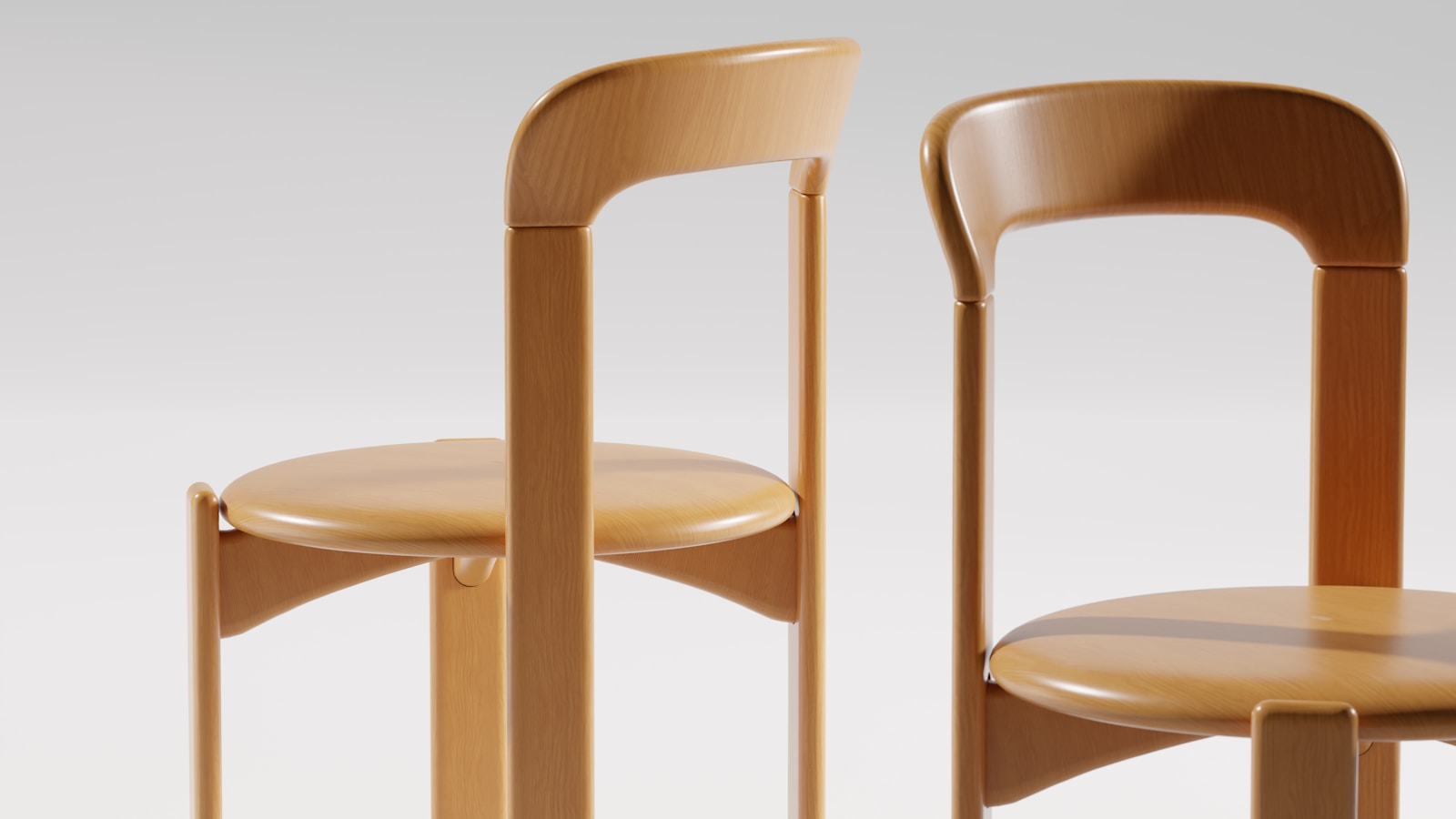
Alvar Aalto did something similar in Finland, but with an additional layer of philosophical seriousness about materials and human wellbeing. His bent plywood furniture for Artek — a company he co-founded in Helsinki in 1935 — was designed explicitly around the idea that the right chair could improve its occupant’s health. The Stool 60, three legs and a round seat, is one of the most produced pieces of furniture in history. You have almost certainly sat on one without knowing it.
What the Contemporary Brands Are Doing
The legacy designers set the tone, but it’s the generation of brands that emerged from the 2000s onwards that have made Nordic aesthetics accessible and commercially global.
HAY, founded in Copenhagen in 2002 by Rolf and Mette Hay, is perhaps the clearest example of what happens when you take Scandinavian design principles seriously but refuse to be precious about them. Their furniture and homeware is affordable-ish, genuinely well-designed, and widely distributed — the brand sells in over sixty countries. What HAY understood, before many of its competitors, was that good design didn’t need to be expensive to be credible. The J77 chair, a riff on a classic Danish school chair, costs a fraction of what you’d pay for a vintage original and works just as hard in a room.
Muuto, also Danish, positions itself a tier above and has carved out a devoted following among designers and architects who want something quieter and more material-considered than the more obviously trend-chasing end of the contemporary market. Their collaboration with Cecilie Manz on the Unfold Pendant — a simple aluminium cone that you can adjust to focus light exactly where you want it — is the kind of product that answers a question you didn’t know you had.
&Tradition, another Copenhagen-based brand, has taken an interesting, different path: they license and re-release important pieces from the Nordic design archive alongside new commissions. Their reissue of Viggo Bindesbøll’s 1950s Clam Chair, and their ongoing relationship with designers like Ilse Crawford and Space Copenhagen, gives them a foot in both history and the present. It works.
Ferm Living is the brand that made Nordic design feel younger. Where some of its peers can feel reverential to the point of austerity, Ferm Living brings colour, pattern, and a slight playfulness that doesn’t undermine the underlying rigour. Their textiles in particular — linen cushions, wool throws, hand-dyed cotton — have a tactile quality that photographs well but feels even better in person.
The Principles, As Best as They Can Be Named
If you ask Scandinavian designers to articulate what makes their approach distinct, they tend to get slightly uncomfortable, because the honest answer is that they don’t think of it as an aesthetic so much as a set of values that produce an aesthetic. But it’s possible to reverse-engineer some principles.
Material honesty. If something is made of oak, it looks like oak. If it’s concrete, it looks like concrete. There is a deep cultural aversion in Nordic design to disguise — to surfaces that pretend to be something they’re not. This isn’t purism for its own sake. It’s a practical acknowledgement that honest materials age better and feel better to live with.
Restraint as generosity. Empty space in a Nordic interior isn’t absence. It’s a deliberate decision to give the eye somewhere to rest. The Swedes have a word, lagom, that roughly means “just the right amount” — not too much, not too little. It’s an infuriating concept to translate, but an extremely useful one to apply.
Craft over novelty. Nordic design culture tends to be suspicious of things that are interesting only because they’re new. A well-made wooden chair from 1955 is more valuable than a poorly made one from last year. This orientation toward durability and quality over trend-chasing is partly economic — good furniture is expensive and expected to last — and partly cultural.
Light as a material. The management of light — where it comes from, how it moves through a room over the course of a day, what temperature and quality it has — is treated with the same seriousness as any other design decision. Arne Jacobsen designed the lighting in his buildings as carefully as the furniture. The same instinct runs through contemporary Nordic interiors. A single good pendant over a dining table, properly positioned, does more for a room than any amount of decorative accessories.
Why It Travels So Well
Here’s the thing that’s actually interesting about Nordic aesthetics taking over the world: it shouldn’t work this well outside of its original context. The design was made for specific climates, specific building traditions, specific cultural habits. And yet a Muuto lamp looks right in an apartment in Melbourne. A Fritz Hansen table works in a house in São Paulo. Why?
Part of the answer is that restraint travels. An aesthetic built around what to leave out rather than what to put in is inherently adaptable — it doesn’t impose a specific cultural identity on a space, it creates conditions for one to emerge.
Part of it is that the underlying values — quality, durability, craft, honesty about materials — resonate across cultures in a way that more maximalist design traditions don’t always manage. People everywhere want to live with things that are well-made and will last. Nordic design has become shorthand for that.
And part of it, honestly, is IKEA. There is a direct line from Alvar Aalto’s democratising instincts — his belief that good design should be available to everyone, not just the wealthy — to the flat-pack global phenomenon that has put a version of Nordic design principles in homes in 63 countries. The execution is variable. The underlying logic is sound.
What to Actually Do With It
If you want to bring some of this into your own home, the most useful thing to know is that Nordic interiors are not, at their core, about buying specific products. They’re about editing. Most people’s homes would benefit more from removing things than adding them.
After that: invest in one good piece of lighting before anything else. A Flos Skygarden, a &Tradition Flowerpot, a Le Klint shade — something that makes the evening feel different. Light quality transforms a room more efficiently than anything else you can buy.
Then choose one material and do it properly. A genuine wool rug. A solid oak table. One piece of bent plywood. Nordic interiors tend to have a material anchor — something that is unmistakably real — and build from there. Ferm Living’s textiles are a good entry point if you’re not ready for furniture investment. String Furniture’s modular shelving system, designed by Nils Strinning in 1949 and still in production, is perhaps the most useful shelving ever designed and holds its value extraordinarily well.
Beyond that, be patient. The homes you admire in Stockholm apartments or in the pages of Danish design magazines have usually been lived in for years. The books are worn. The wood has a patina. The blanket on the sofa is there because someone actually uses it. That’s the thing about Nordic interiors that’s hardest to replicate quickly: they look like someone lives in them. Genuinely, comfortably, without performance. That takes time, and you can’t buy it flatpack.
Brands mentioned: Carl Hansen & Søn, Fritz Hansen, Artek, HAY, Muuto, &Tradition, Ferm Living, String Furniture, Flos, Le Klint.