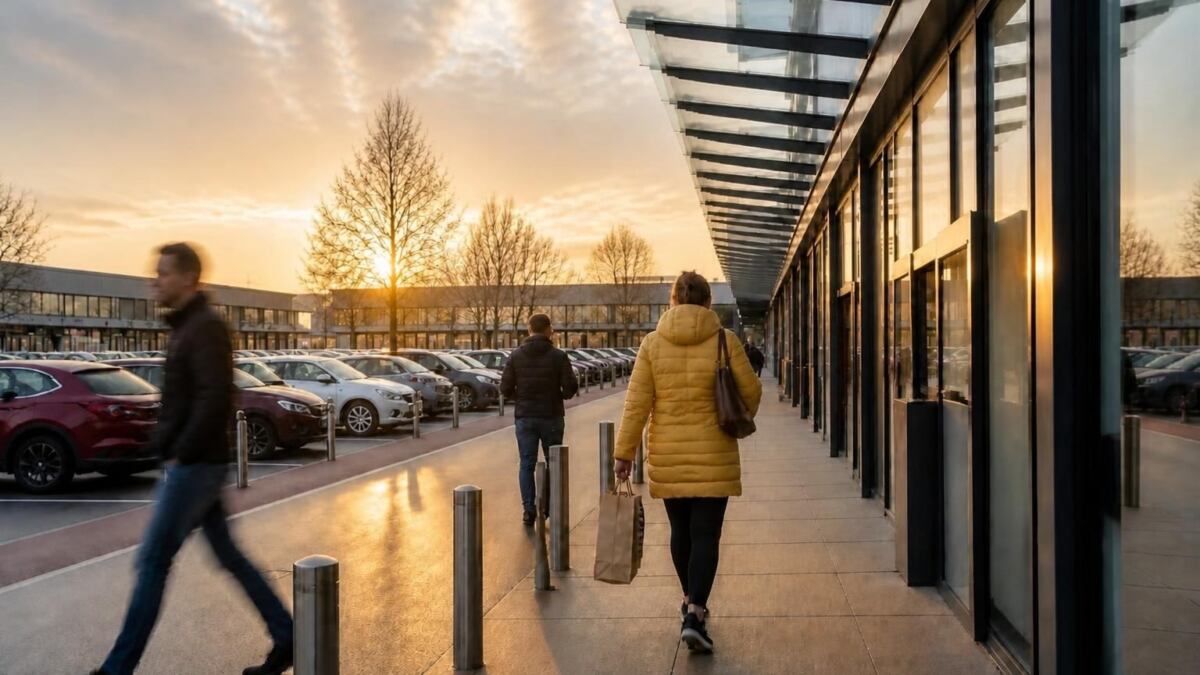
Despite the sustained rise of online shopping, physical retail continues to play a central role in consumer spending, with retail parks emerging as a key growth area for both retailers and shoppers.
Online retail sales in the UK have stabilised at just over 28%, below their peak during the pandemic, underscoring the ongoing importance of brick-and-mortar stores. The focus has shifted from questioning the survival of physical retail to how landlords and retailers allocate space across various retail formats.
Michaela Walker, a commercial property solicitor at Clarke Willmott, emphasised the evolving retail landscape: “The retail landscape has changed significantly, but reports of the death of physical retail have been greatly exaggerated. What we are seeing is a more nuanced evolution in the way retailers use physical space, with retail parks increasingly forming an important part of that picture.” She highlighted that retail parks combine accessibility, convenience, and flexibility, aligning well with modern shopping behaviours. For retailers, these locations offer larger units, easier access, and opportunities to blend traditional retail with services such as click-and-collect and returns, enhancing the omnichannel experience.
Market data reflects this trend. British Land, a major retail park owner in the UK, reports 99% occupancy across its portfolio of 1,200 units. Savills notes that only 1.8% of retail park floorspace is currently available, with 91% of tenants opting to renew leases rather than relocate. In 2025, CBRE identified retail parks as having the lowest vacancy rates among major retail property sectors, alongside the strongest five-year rental growth in UK retail overall.
Johnny Rowland of Savills described the situation as “a structural imbalance between supply and demand,” creating intense competition, especially for well-positioned retail parks. This scarcity is driven by limited land availability, high construction costs, and challenging development appraisals, coupled with the sector’s strong covenant quality.
The tenant mix in retail parks is also diversifying. The traditional association with DIY, furniture, and automotive retailers no longer captures the full picture. Food, fashion, homewares, leisure, and value retailers are expanding their presence. Knight Frank identified Home Bargains as the fastest-growing retail park tenant in 2025, with 265 units. Both Aldi and Lidl operate over 100 retail park sites each, while Next, Marks & Spencer, and Skechers have adopted out-of-town strategies alongside their city-centre locations. Savills describes this as a holistic expansion approach, recognising how different retail formats complement each other in reaching varied customer bases.
Michaela explained: “Retailers are increasingly looking at their estates as a portfolio rather than making an either-or choice between the high street, shopping centres and retail parks. Each format serves a different purpose, and the strongest strategies are often those that recognise how those locations can work together.” She added that retail parks appeal particularly to retailers whose customers prioritise convenience, citing easy road access, free parking, and the ability to combine multiple shopping trips as significant advantages. Larger units also provide retailers with greater operational flexibility and integration opportunities with their online offerings.
However, the rise of retail parks does not signal a decline for high streets or shopping centres. Instead, strong demand for retail park space is part of a broader evolution across all retail property formats. Each format serves distinct roles within the customer journey, and retailers increasingly employ multiple locations to engage different audiences.
“This isn’t the death of the high street,” Michaela stated. “It is about retailers understanding where different types of physical space work best for their particular business and customers. Retail parks are clearly experiencing strong demand at the moment, but that exists alongside continuing investment in town and city centres and shopping centres. The important point for retailers is to have a clear location strategy and to understand what each part of their estate is intended to achieve.”
Given the high demand, retailers seeking to expand into retail parks may find waiting for units to become publicly available ineffective, as spaces are often taken before hitting the market. Early engagement with landlords and agents is increasingly crucial.
For developers, the supply shortage presents opportunities, though planning processes and development economics remain significant hurdles, with some applications taking nearly two years to process.
The upcoming 2026 business rates revaluation is also influencing cost considerations for retailers across formats, adding complexity to location and estate strategy decisions.
Michaela advised: “For occupiers, the message is to think ahead. If a retail park is an important part of your expansion strategy, it is worth engaging early rather than waiting for a unit to become publicly available. Businesses also need to consider the wider costs of occupation, including rent, business rates and fit-out, alongside the operational benefits that a particular location can offer. With supply constrained and competition for good-quality space high, having a clear strategy can make a significant difference.”
The future of physical retail is likely to focus less on choosing between online and offline channels and more on optimising the use of physical space. For some retailers, this will mean investing in flagship stores in town and city centres; for others, it will involve larger, more accessible, and operationally efficient stores on retail parks.
Michaela concluded: “Physical retail remains incredibly relevant. What is changing is the role that individual stores and locations play within a retailer’s wider business. The combination of retail parks, shopping centres and high streets is helping physical shopping remain vibrant and relevant. Retailers that understand how those different formats complement one another will be best placed to make the most of the opportunities ahead.”
Clarke Willmott’s retail and leisure team supports occupiers aiming to expand their retail or leisure estates across multiple formats, advising on location strategy, lease negotiations, business rates challenges, and all aspects of retail and leisure property requirements. The national law firm operates from offices in Birmingham, Bristol, Cardiff, London, Manchester, Southampton and Taunton.