
Websites like Dezeen: The top 10 design and architecture magazines & websites
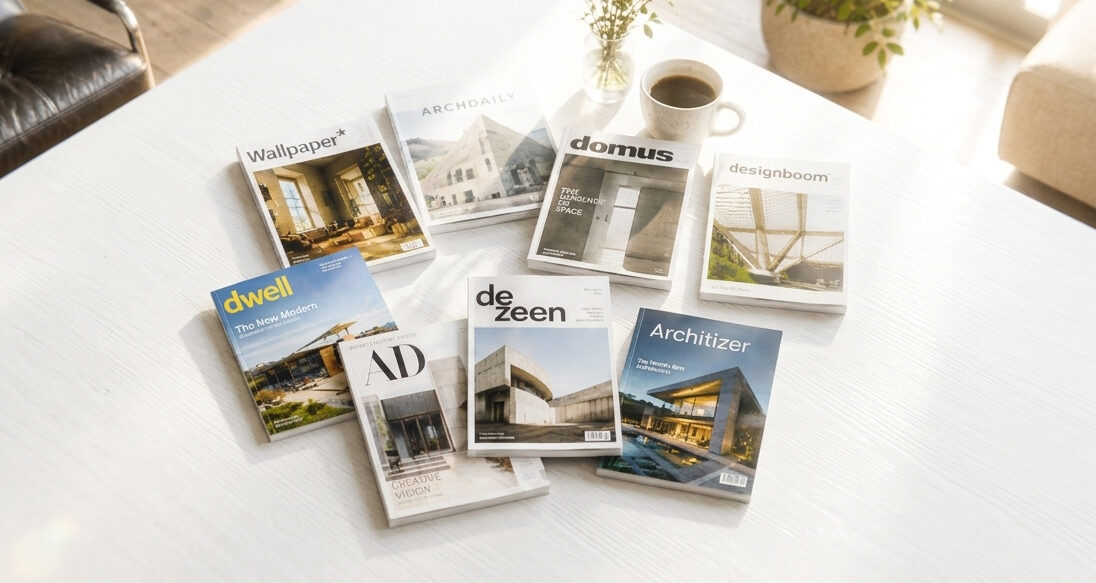
Every great design begins somewhere, a half-formed idea, a late-night scroll, a building spotted across the street that stops you cold. For architects, designers and devoted enthusiasts, the search for that spark increasingly leads to the same place: the world’s top design and architecture websites, where the industry’s best work is documented, debated and celebrated in real time. These platforms have fundamentally changed how the design world sees itself, replacing the slow drip of monthly print runs and gallery openings with a relentless, gorgeous, endlessly updated feed of projects, provocations and personalities from every corner of the globe. Today, a student in Seoul, a senior partner in São Paulo and a design-curious reader in Manchester are all looking at the same buildings, the same furniture, the same provocative installations, often within hours of their completion.
Dezeen has led that conversation since 2006. The London-based platform has become something close to the design industry’s newspaper of record, required reading for anyone who cares about how the built world looks and the people shaping it. But for those looking for websites like Dezeen, the good news is that the field is rich and genuinely varied. Across the UK, the US and Europe, a handful of rivals, each with its own character, editorial focus and loyal constituency, compete for the attention of the same restless, visually hungry audience. Some chase the breadth of Dezeen’s cultural coverage; others dig deeper into technical practice, product specification or residential design. Together they form the definitive landscape of architecture and design media online, and collectively they are responsible for shaping the visual conversation of our time.
Whether you’re a practising architect hunting for technical inspiration, a student with a university deadline and a blank page, a manufacturer looking to reach the right professional audience, or simply someone who once spent twenty minutes staring at a beautifully photographed staircase, there is a design and architecture website built precisely for you. The challenge is knowing where to look. We’ve ranked and assessed ten of the very best, weighed their strengths, identified their weaknesses and matched each to the readers most likely to get the most from them, so you can find yours.
1. ArchDaily (USA)
If Dezeen is the design world’s newspaper, ArchDaily is its encyclopedia. Founded in Chile in 2008 and now operating globally, it has grown into the most visited architecture platform on the internet, claiming around 360,000 daily users on its English edition alone, with a further 290,000 across its multilingual versions. That puts it comfortably among the 1,000 most visited websites on the planet.
The scope is vast: new buildings, competitions, urban plans and industry news, published with a frequency that borders on relentless. Every continent is represented; every scale of project, from a beach pavilion to a city-defining tower. What ArchDaily lacks in lifestyle breadth – there is almost no product design, fashion or interiors coverage here- it more than compensates for in depth and diversity of architectural content. For practising architects and students, it remains an indispensable daily resource. The site is free to access and monetised through display advertising, sponsored content and its annual Building of the Year competition.
2. Dezeen (UK)
Launched in London in 2006, Dezeen has built one of the most recognisable editorial voices in design journalism. Its scope is deliberately broad — architecture sits alongside interior design, product design, furniture, technology and art, and its tone is consistently accessible without being shallow. This is design news for people who take design seriously, written as though it matters, because it does.
By the time of its acquisition in 2021, Dezeen had accumulated around three million monthly unique visitors and 6.5 million social media followers. Its offering has since expanded to include the Dezeen Awards (now a significant annual event in the industry calendar), a curated jobs board, a school directory and a daily newsletter. There is no paywall. Monetisation comes from advertising, award entry fees and sponsored editorial partnerships. For anyone seeking a single, reliably excellent source of global design news, Dezeen remains the benchmark.
3. designboom (Italy)
One of the internet’s earliest design publications, designboom launched from Milan in 1999 and has been quietly influential ever since. It sits at the intersection of industrial design, architecture and contemporary art, with a sensibility that is more conceptual and culturally curious than its Anglo-American counterparts. Coverage of design fairs — Milan’s Salone del Mobile in particular — is among the best anywhere online.
Acquired by Swiss media group NZZ in 2022, designboom draws several million readers monthly across its international editions, with offices in Milan, New York and Beijing. The Designboom Mart, a travelling exhibition platform, gives it a physical presence that most of its peers lack. An online store selling prints and design objects rounds out a monetisation model that also includes display advertising and sponsored competitions. Its breadth is a strength; those seeking tight architectural focus may occasionally find it too diffuse.
4. Wallpaper* (UK)
Few publications have maintained the aesthetic authority that Wallpaper* has sustained since its founding in 1996. The magazine — and its website — occupies a distinctive position: not a trade publication, not a consumer glossy, but something more elusive, a design-led cultural magazine that drifts comfortably between architecture, fashion, travel, art and object. The photography is consistently exceptional.
The website carries daily news and features that mirror the magazine’s elevated sensibility, drawing a readership that skews affluent and deeply design-conscious. WallpaperSTORE, its e-commerce arm, sells a curated selection of designer goods — an elegant solution to the perennial problem of monetising premium editorial online. Some archive content sits behind a subscription wall. For those interested in design as part of a broader cultural conversation rather than as a professional discipline, Wallpaper* is in a class of its own.
5. Dwell (USA)
Where most architecture publications reach upward toward the monumental and the iconic, Dwell points homeward. Founded in San Francisco in 2000, it has carved out an enduring niche in modern residential design — house tours, prefab homes, renovation stories and practical living ideas, and it does so with a warmth and accessibility that its more austere competitors rarely attempt.
The community dimension is central to what makes Dwell different: architects and homeowners are invited to contribute projects, giving the site a collaborative, generous feeling. Coverage is predominantly US-focused and heavily residential, which is both its defining strength and its obvious limitation. A print edition and the annual Dwell on Design fair reinforce a brand that still feels rooted in something physical. For homeowners, residential architects and students interested in the domestic scale, it is essential reading.
6. Architizer (USA)
Launched in New York in 2009, Architizer has always been less a publication than a platform, and it has leaned into that distinction with increasing confidence. Its core offer is a vast, searchable database of architectural projects and building products: over three million images and 163,000 projects at last count, making it an invaluable research tool for working architects and specification writers. Its acquisition in 2022 by Material Bank, a materials marketplace, confirmed its identity as a B2B resource as much as an editorial one.
The A+Awards, Architizer’s annual architecture competition, have grown into one of the industry’s more prestigious accolades, partly because of the platform’s enormous reach — over 870,000 newsletter subscribers and 4.5 million social media followers. The Journal publishes selected project features and interviews, though news coverage is less frequent than on Dezeen or ArchDaily. For manufacturers and product brands looking to reach architects directly, Architizer’s directory and advertising products are among the most targeted available.
7. Archinect (USA)
Archinect is the oldest platform on this list, and it wears its age with a certain lived-in charm. Founded in Los Angeles in 1997, it has long positioned itself as a community hub for architects rather than a conventional publication and the community remains its greatest asset. The forums are active and opinionated; the job board is among the most used in the US profession; school listings and firm directories make it a practical resource for students navigating early career decisions.
Editorial content covers architecture news and culture with a chattier, more discursive tone than its larger competitors. Long-form essays and competition news often appear here before they reach mainstream outlets. Traffic is more modest than ArchDaily or Dezeen, and the interface is, charitably, functional rather than beautiful. But for American architecture students and young professionals, Archinect offers something no glossier platform quite replicates: the sense of a genuine professional conversation.
8. The Architect’s Newspaper (USA)
The Architect’s Newspaper (AN) does not traffic in lifestyle or aspiration. Founded in New York in 2003 as a print tabloid for working architects, it has built its reputation on rigorous, US-focused coverage of the architecture industry: projects, yes, but also regulation, planning policy, firm business news, sustainability and education. It is, in the best sense of the term, a trade publication — and the American architectural profession is better informed for it.
The website is updated daily on weekdays, with strong regional depth and solid authority in the profession. The AN Best of Design Awards have become a recognised fixture in the North American calendar. Print circulation sits at around 25,000; online readership reaches tens of thousands per month. Beyond the continental United States and Canada, coverage thins considerably — a limitation worth knowing before you bookmark it.
9. Architectural Digest (USA)
Architectural Digest has been in print since 1920, long enough to have featured the homes of generations of the famous, the wealthy and the aspirational. Now under Condé Nast, its website is a glossy, high-traffic destination for luxury residential design, celebrity home tours and interior trend coverage. The photography is immaculate; the properties, uniformly extraordinary.
It draws millions of monthly visitors, making it one of the most-read design destinations online, powered by the scale of the Condé Nast machine and the enduring appeal of looking at other people’s beautiful homes. As a professional resource, it offers little; as aspirational entertainment, it has few rivals in the space. Luxury advertisers, from real estate to fashion to furnishings, find in Architectural Digest a uniquely receptive audience.
10. Domus (Italy)
Founded in Milan in 1928 by the architect Gio Ponti, Domus is the elder statesman of design publishing — and it carries that distinction with appropriate gravity. Its website and monthly print edition blend contemporary projects with critical essays, historical analysis and thematic special issues. Coverage of architecture, design and art is framed by a seriousness of purpose that distinguishes it from more news-driven competitors.
The editorial roster includes leading architects, scholars and critics from around the world, and special editions — tied to events such as Milan Design Week — have become collector’s items in their own right. Some archive content sits behind a paywall. For professionals and students interested in design theory, architectural history and the intellectual context of built work, Domus occupies territory that no other site on this list attempts to claim.
A note for brands and manufacturers
For companies operating in the architecture and built environment space, visibility on the right platforms matters enormously. Beyond the editorial sites listed above, PlaceGuild (that’s us – a UK-based platform for the property and built environment sector), offers a curated Brand Directory connecting architects, designers and developers with vetted suppliers and design firms. It is a useful complement to the editorial resources above, particularly for those looking to be discovered by a professional British audience.
Whether you return to one site daily or graze across several depending on the project at hand, the design internet has never been richer. Bookmark accordingly.
More Architecture and Design Websites to Explore
If you are looking beyond the publications in this list, it helps to think about what kind of architecture and design coverage you actually want. Some websites are strongest for detailed building projects, while others focus more on interiors, products, design culture or industry news.
Websites Like Dezeen
Dezeen is one of the best-known online architecture and design publications, covering architecture, interiors, products and design news. It is primarily a digital publication rather than a traditional print magazine, and its broad editorial mix is one reason people often look for similar websites.
For readers searching for websites like Dezeen, designboom is one of the closest alternatives, particularly for contemporary architecture, product design, art and experimental projects. Wallpaper* also covers architecture and design, but with a stronger emphasis on interiors, lifestyle and luxury.
ArchDaily is another strong alternative if your main interest is architecture rather than the wider design world. It has a particularly large archive of completed projects, making it useful for architects, students and anyone researching buildings in more detail.
Dwell is a good choice for residential architecture, interiors and modern homes, while Architizer is useful for discovering architecture firms, award-winning projects and notable buildings from around the world.
ArchDaily vs Dezeen
ArchDaily and Dezeen overlap considerably, but they serve slightly different purposes.
ArchDaily is generally more focused on architecture projects and professional reference material. Its project pages often provide detailed information about individual buildings, architects, locations and design approaches, which makes it especially useful for architectural research and inspiration.
Dezeen has a broader editorial focus. Alongside architecture, it covers interiors, furniture, products, technology and wider design trends. It is therefore a good choice if you want to follow what is happening across the design industry rather than concentrating only on buildings.
If you want detailed architecture projects and a large reference library, ArchDaily is likely to be the better option. If you prefer a wider mix of architecture, interiors and contemporary design news, Dezeen may be more useful.
Where to Find Notable Architecture Projects Online
There are several good places to read about notable architecture projects online.
ArchDaily is particularly useful for browsing a large number of completed projects, including residential, cultural, commercial and public buildings. It is a strong starting point if you want to research architecture by project type, location or architect.
Dezeen is useful for discovering significant new buildings alongside broader architecture and design news. Its editorial coverage tends to focus on projects with strong visual, cultural or design interest.
Architizer is another useful resource, especially if you want to discover well-known architecture practices, award-winning projects and emerging firms.
Together, these sites provide a useful mix of detailed project research, design inspiration and current architecture news.